
Innovation often begins in places few people ever see. On the factory floor at 4 Seasons Industries, years of quiet experimentation revealed something powerful. With the right engineering and persistence, fibre waste could become a sustainable foundation for high-performance products that support homes, farms, and the environment.
For decades, Australia struggled with low-value paper and cardboard that lacked meaningful recycling destinations. Instead of accepting this as an unavoidable outcome, 4 Seasons recognised that every discarded fibre held an opportunity. This vision sparked a manufacturing journey built on technical curiosity, responsible design, and a commitment to creating real solutions.
Today, that journey has transformed 4 Seasons into a leader in cellulose-based innovation. The company now produces high-quality insulation, environmental solutions, and agricultural inputs that turn fibre waste into something practical, valuable, and surprisingly versatile.
What Is Cellulose?
Cellulose is one of the most abundant natural materials on Earth. It forms the structural framework of plants, giving paper, cardboard, and agricultural fibres their strength. This simple organic compound becomes incredibly versatile when processed correctly.
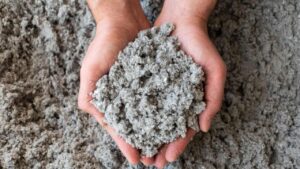
In its recycled form, cellulose becomes a lightweight, durable material with excellent absorbency, thermal stability, and acoustic properties. These qualities make it ideal for products ranging from home insulation to poultry bedding and environmental solutions.
At 4 Seasons Industries, cellulose is more than a recycled material. It is a foundation for innovation. By refining fibre blends and understanding the science behind their behaviour, the team transforms everyday waste into high-performance products built for real-world challenges.
Understanding the Fiber Behind the Future
The path to high-performance cellulose begins with understanding how the material behaves. Every fibre has unique qualities, absorbing moisture differently and responding unpredictably to pressure and heat. Years of hands-on work taught the 4 Seasons team how to read and refine cellulose with exceptional precision.
This deep understanding became the foundation for innovation. Rather than forcing fibre to behave, 4 Seasons learned how to work with it. Through research and trialling, the team identified the blends, textures, and densities needed to deliver consistent performance across a wide range of applications.
The company also recognised that not all waste fibre is equal. Moisture, fragment size, and contamination levels vary dramatically. Mastering this variability became central to turning waste into reliable products.
- Insight: Australia’s circularity rate sits at just 4.3 percent, unchanged from last year and well below the global rate of 6.9 percent (CGR). Reaching the national target to double this by 2035 requires smarter ways to reuse the materials we already have (DCCEEW).
Engineering Materials Through Conditioning
Transforming mixed paper and cardboard into functional materials begins with conditioning. This process prepares fibre for performance by ensuring predictability in every batch.
Conditioning at 4 Seasons includes:
- Evaluating moisture content
- Screening for particle consistency
- Removing contaminants
- Rebalancing the fibre blend
- Ensuring optimal density before processing
Each step supports reliability. Even small variations affect fire performance, acoustic absorption, or structural stability. Precision conditioning ensures every fibre is ready to play its part in a high-performance product.
Because conditioning is so critical, 4 Seasons invested heavily in equipment capable of handling diverse inputs while producing uniform outputs. This investment paid off, allowing the company to scale production without sacrificing quality.
- Insight: In 2022–23, Australia exported 3.6 million tonnes of waste and recovered materials, including almost 1 million tonnes of paper and cardboard. That means around 40 percent of our recovered fibre left the country instead of being reused locally, highlighting how much potential value we lose when we rely on overseas processing (DCCEEW).
Blending Innovation Into Every Product
Once conditioned, fibre is blended with exacting control. Blending determines the internal structure of each product, shaping how it performs over time. The right blend offers strength, flexibility, and environmental stability.
Through extensive experimentation, 4 Seasons developed formulations tailored to specific applications. For insulation, achieving optimal thermal and acoustic performance required precise density targets. For poultry bedding, breathability and absorbency became the primary considerations. For environmental products, such as erosion control and hydroseeding media, moisture retention and texture played a significant role.
Every blend represents countless hours of refinement. The team adjusted ratios, tested performance, and reviewed field results to ensure each product could withstand real-world conditions.
- Insight: SupaCell’s collaborative journey continues to gain national attention. The team recently celebrated a major win at the 2025 Hunter Manufacturing Awards, recognising the powerful partnership behind Australia’s first truly circular insulation innovation.
Applying Scientific Control to Quality
Quality control is the quiet powerhouse behind every 4 Seasons product. Rigorous testing ensures each batch meets expectations and delivers long-term benefits to customers.
Quality control includes:
- Moisture testing
- Density verification
- Fibre size analysis
- Fire behaviour trials
This disciplined approach gives customers confidence. Builders know insulation will perform consistently. Farmers rely on bedding that improves shed hygiene. Councils and contractors trust environmental products to perform safely and predictably.
Quality is not a phase. It is woven into every stage of production, ensuring reliability from the moment fibre enters the facility to the moment a finished product leaves it.
Building a Circular Model Through Practical Solutions
Innovation at 4 Seasons is designed to serve real needs. Over time, the company expanded from insulation into multiple new sectors, each benefiting from recycled fibre.
Its portfolio now includes:
- Thermal and acoustic insulation
- Top-up insulation for existing homes
- Alternative poultry bedding
- Hydro-mulching and hydroseeding media
- Landfill cover materials
- Oil spill absorbents
- Erosion control solutions
Each product diverts waste from landfill while supporting practical, everyday applications. This model proves that circularity is more than an ideal. It is a functional, scalable approach to manufacturing.
Sources: