We will be closed from December 22nd - January 9th. Merry Christmas & Happy New Year!

The Hidden Science of Cellulose: How 4 Seasons Turned Fibre Waste into High-Performance Products

eco-friendly cellulose insulation made from recycled paper

Innovation often begins in places few people ever see. On the factory floor at 4 Seasons Industries, years of quiet experimentation revealed something powerful. With the right engineering and persistence, fibre waste could become a sustainable foundation for high-performance products that support homes, farms, and the environment.

For decades, Australia struggled with low-value paper and cardboard that lacked meaningful recycling destinations. Instead of accepting this as an unavoidable outcome, 4 Seasons recognised that every discarded fibre held an opportunity. This vision sparked a manufacturing journey built on technical curiosity, responsible design, and a commitment to creating real solutions.

Today, that journey has transformed 4 Seasons into a leader in cellulose-based innovation. The company now produces high-quality insulation, environmental solutions, and agricultural inputs that turn fibre waste into something practical, valuable, and surprisingly versatile.

What Is Cellulose?

Cellulose is one of the most abundant natural materials on Earth. It forms the structural framework of plants, giving paper, cardboard, and agricultural fibres their strength. This simple organic compound becomes incredibly versatile when processed correctly.

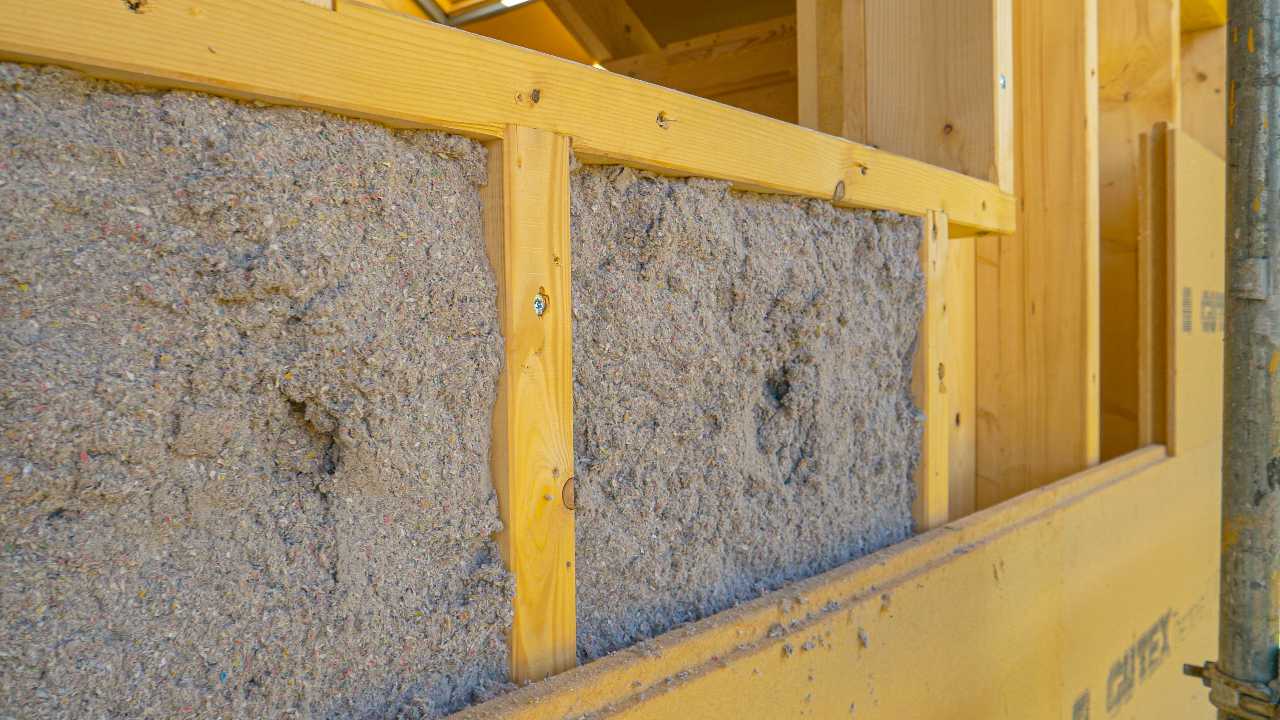
In its recycled form, cellulose becomes a lightweight, durable material with excellent absorbency, thermal stability, and acoustic properties. These qualities make it ideal for products ranging from home insulation to poultry bedding and environmental solutions.

At 4 Seasons Industries, cellulose is more than a recycled material. It is a foundation for innovation. By refining fibre blends and understanding the science behind their behaviour, the team transforms everyday waste into high-performance products built for real-world challenges.

Understanding the Fiber Behind the Future

The path to high-performance cellulose begins with understanding how the material behaves. Every fibre has unique qualities, absorbing moisture differently and responding unpredictably to pressure and heat. Years of hands-on work taught the 4 Seasons team how to read and refine cellulose with exceptional precision.

This deep understanding became the foundation for innovation. Rather than forcing fibre to behave, 4 Seasons learned how to work with it. Through research and trialling, the team identified the blends, textures, and densities needed to deliver consistent performance across a wide range of applications.

The company also recognised that not all waste fibre is equal. Moisture, fragment size, and contamination levels vary dramatically. Mastering this variability became central to turning waste into reliable products.

  • Insight: Australia’s circularity rate sits at just 4.3 percent, unchanged from last year and well below the global rate of 6.9 percent (CGR). Reaching the national target to double this by 2035 requires smarter ways to reuse the materials we already have (DCCEEW).

Engineering Materials Through Conditioning

Transforming mixed paper and cardboard into functional materials begins with conditioning. This process prepares fibre for performance by ensuring predictability in every batch.

Conditioning at 4 Seasons includes:

  • Evaluating moisture content
  • Screening for particle consistency
  • Removing contaminants
  • Rebalancing the fibre blend
  • Ensuring optimal density before processing

Each step supports reliability. Even small variations affect fire performance, acoustic absorption, or structural stability. Precision conditioning ensures every fibre is ready to play its part in a high-performance product.

Because conditioning is so critical, 4 Seasons invested heavily in equipment capable of handling diverse inputs while producing uniform outputs. This investment paid off, allowing the company to scale production without sacrificing quality.

  • Insight: In 2022–23, Australia exported 3.6 million tonnes of waste and recovered materials, including almost 1 million tonnes of paper and cardboard. That means around 40 percent of our recovered fibre left the country instead of being reused locally, highlighting how much potential value we lose when we rely on overseas processing (DCCEEW).

Blending Innovation Into Every Product

Once conditioned, fibre is blended with exacting control. Blending determines the internal structure of each product, shaping how it performs over time. The right blend offers strength, flexibility, and environmental stability.

Through extensive experimentation, 4 Seasons developed formulations tailored to specific applications. For insulation, achieving optimal thermal and acoustic performance required precise density targets. For poultry bedding, breathability and absorbency became the primary considerations. For environmental products, such as erosion control and hydroseeding media, moisture retention and texture played a significant role.

Every blend represents countless hours of refinement. The team adjusted ratios, tested performance, and reviewed field results to ensure each product could withstand real-world conditions.

  • Insight: SupaCell’s collaborative journey continues to gain national attention. The team recently celebrated a major win at the 2025 Hunter Manufacturing Awards, recognising the powerful partnership behind Australia’s first truly circular insulation innovation.

Applying Scientific Control to Quality

Quality control is the quiet powerhouse behind every 4 Seasons product. Rigorous testing ensures each batch meets expectations and delivers long-term benefits to customers.

Quality control includes:

  • Moisture testing
  • Density verification
  • Fibre size analysis
  • Fire behaviour trials

This disciplined approach gives customers confidence. Builders know insulation will perform consistently. Farmers rely on bedding that improves shed hygiene. Councils and contractors trust environmental products to perform safely and predictably.

Quality is not a phase. It is woven into every stage of production, ensuring reliability from the moment fibre enters the facility to the moment a finished product leaves it.

Building a Circular Model Through Practical Solutions

Innovation at 4 Seasons is designed to serve real needs. Over time, the company expanded from insulation into multiple new sectors, each benefiting from recycled fibre.

Its portfolio now includes:

Each product diverts waste from landfill while supporting practical, everyday applications. This model proves that circularity is more than an ideal. It is a functional, scalable approach to manufacturing.

Sources:

How We Helped Sharyn Create a Comfortable, Energy-Efficient Home

How We Helped Sharyn Create a Comfortable, Energy-Efficient Home 1

At 4 Seasons Insulations, we’re all about making homes more comfortable, sustainable, and energy efficient—without relying heavily on heating and cooling systems. Recently, we had the pleasure of working with Sharyn, a homeowner in Pretty Beach, NSW, who wanted to make her home more comfortable year-round while cutting back on energy use

The Challenge: A Beautiful But Barely Insulated Home

Sharyn’s home, built in 2003, enjoys a sunny northern aspect and stays warm through the day in winter. But it had a major drawback—it didn’t hold heat after the sun went down. 

Built on poles, with timber floors and no real insulation, the home quickly lost its warmth at night, and summers were no better. With no air conditioning, she often found herself retreating from the heat by mid-afternoon. 

Her first step was to install blockout blinds and a large ceiling fan. While these made a slight difference, they weren’t enough to keep the indoor temperature comfortable all year round. That’s when Sharyn turned to insulation.

Sharyn’s Search for a Healthier, Greener Insulation Option

Through her own research, Sharyn discovered Woolcell—a natural insulation product made from sheep’s wool, recycled paper, Borax, and Boric acid. 

With gable ceilings throughout the house, traditional batts would have required removing much of the roof. Woolcell could be pumped into the roof cavity through a manhole, making it the ideal solution.

She was also keen to avoid fibreglass and wanted a non-toxic option. Woolcell ticked all the boxes: it’s environmentally friendly, fire retardant, and vermin resistant.

Our Solution: Whole-Home Insulation, Done Right

When Sharyn reached out to us, we knew exactly how to help.

We pumped Woolcell into her roof cavity through a manhole, avoiding any major disruption to the roof structure. At the same time, we suggested adding polyester underfloor insulation, which was a straightforward install thanks to the home’s elevated pole design.

The total cost of both insulation upgrades came to $4,250 in 2019—an affordable investment with long-term returns.

The Results: Comfort All Year Round, Lower Energy Bills

Sharyn now enjoys a home that stays cool in summer and warm in winter—with minimal energy use.

“Even on 40-degree days, the inside temperature only gets to around 27–28 degrees,” she told us. “In winter, I usually don’t turn on the heating until 7pm, and I use the ceiling fan on reverse to push the warm air down. I no longer need snow boots just to walk on the floor!”

Since the upgrade, Sharyn’s winter gas and electricity bills have dropped by over 40%. In summer, she only runs the ceiling fan and occasionally uses reverse cycle air conditioning during peak heat.

Her next step? Upgrading window coverings to lock in more winter warmth—proof that energy efficiency is a journey, and insulation is a smart place to start.

Thinking About Insulation? Let’s Chat

Sharyn’s story is just one example of how the right insulation can transform a home. Whether you’re building, renovating, or just want to reduce your energy costs, 4 Seasons Insulations can help.

From eco-friendly roof insulation to effective underfloor solutions, we’ll work with your home’s unique design to create a tailored plan. Get in touch today to explore how we can help make your home more comfortable and energy efficient, year-round.

How Recycled Polystyrene Insulation is Made: An Explanation

a stack of white foam on a wooden pallet

In Australia’s often cold or scorching climate, insulation is the unsung hero of home comfort – it keeps us warm in winter and cool in summer.

While there’s no shortage of insulation options to choose from on the Australian market, one style of insulation stands above the rest not just in terms of effectiveness but also in terms of its environmental value: recycled polystyrene insulation.

In this blog, we’ll explore what exactly recycled polystyrene insulation is and why it works so well. We’ll also unpack the manufacturing process and highlight how this revolutionary product champions sustainability.

What is recycled polystyrene insulation?

Recycled, fire-resistant polystyrene insulation is an eco-friendly insulation solution crafted from repurposed polystyrene foam, diverting it from otherwise being added to landfill.

By transforming waste into a valuable resource, recycled polystyrene not only provides effective insulation but also contributes to sustainability, making it a responsible choice for eco-conscious homeowners.

Is recycled polystyrene insulation effective?

Absolutely. Recycled polystyrene insulation is a highly effective solution for temperature regulation in Australian homes.

Polystyrene is known for its impressive thermal properties, largely a result of the small air pockets inside the foam. Because air is a poor conductor of thermal energy, this heat remains trapped in these air pockets, rather than being transferred into your home on a hot day, or out of your home on a cold night!

As such, recycled polystyrene insulation is exceptional at creating a comfortable indoor environment and it also significantly reduces the need for artificial forms of heating or cooling.

While recycled polystyrene insulation products demonstrate remarkable performance in general, the top choice for cost-conscious and eco-friendly insulation consumers should be the proudly Australian Insulbloc® product.

The most effective retrofit wall insulation on the Australian market, Insulbloc® is a fantastic recycled polystyrene insulation product and stands out due to:

How recycled polystyrene insulation helps save the environment

The effectiveness of recycled polystyrene insulation lies well beyond temperature regulation, performance and comfort. It’s also highly sustainable, preventing used polystyrene from being wasted, reducing your energy consumption and therefore minimising the carbon emissions from your home.

Let’s explore the dual benefits of polystyrene’s energy efficiency and waste reduction.

Reduced use of your heater or air conditioner

The superior insulation offered by recycled polystyrene insulation products like the Insulbloc® diminishes your reliance on heating and air conditioning systems.

A major benefit of reduced consumption is that this translates to lower energy and utility bills. However, it also decreases your home’s overall carbon footprint so that you can enjoy a sustainable approach to comfort that aligns with the principles of eco-conscious living.

It saves polystyrene from going into landfill

By repurposing used polystyrene foam into insulation, recycled polystyrene insulation actively diverts a significant amount of material from ending up in landfills.

This mitigates the environmental impact of polystyrene waste disposal and ensures that it is transformed into a valuable resource. This recycling practice reduces the demand for new polystyrene or insulation materials, contributing to a circular economy.

In this way, recycled polystyrene insulation not only ensures a comfortable living environment for you and your family but also champions environmentalism through resource efficiency and waste reduction.

How polystyrene is recycled and turned into insulation in Australia

In Australia, the transformation of recycled polystyrene into insulation is a journey of efficiency, resourcefulness and environmental responsibility. The process includes a series of meticulous steps, ensuring that the majority of waste is repurposed into a valuable, eco-friendly resource.

1. Collection and sorting

The recycled polystyrene insulation journey begins with the collection of discarded polystyrene materials, often used in packaging or signage. These items are meticulously vetted, and contaminants are removed to guarantee the purity of the material.

2. Re-processing

The polystyrene is then re-processed. This stage is fundamental to creating the shape and foundation for recycled polystyrene insulation.

3. End product

The final recycled fire-rated insulation product is ready for install in homes and buildings and is a sustainable solution that diverts polystyrene waste away from landfills.

This innovative and beneficial process is a perfect example of Australia’s increasingly circular economy and showcases the nation’s growing dedication to environmental responsibility and conservation principles.

Try Insulbloc®, an incredible recycled polystyrene product, from 4 Seasons Insulation.

Now that you have everything you need to know about the superior performance of recycled polystyrene insulation, it’s time you enjoy the benefits of this sustainable product in your home!

At 4 Seasons Insulation, we’ll provide you with the best recycled polystyrene insulation on the market – Insulbloc®.

An innovative wall insulation product, made in Australia for Australian homes, Insulbloc® lets you say goodbye to uncomfortable temperatures and say hello to eco-friendly energy savings.

Get in touch with 4 Seasons Insulation today for a free quote to insulate your home with Insulbloc®.

Have a look at our Central Coast services:

Have a look at our Sydney services:

Have a look at our Newcastle services:

Insulation for Rentals: Happy Tenants and Higher Value

insulated house and coins

If you’re the owner of a rental property, you have a lot to consider!

From managing your finances to liaising with agents or brokers – you can be forgiven for not treating the comfort of tenants as a top priority.

But while insulation for rentals may just seem like another “nice to have” — it can have a significant impact on tenant retention, energy efficiency, and overall property value – not to mention keeping your tenants comfortable is the right thing to do!

In this article, we will explore the importance of insulation in rental properties, the current state of insulation laws in Australia, and why you should consider investing in high-quality insulation for your rental property.

What is Insulation?

Insulation is used to slow down or prevent the flow of heat, keeping homes warmer in winter and cooler in summer. With roof, wall, and floor insulation all available to minimise heat transfer, insulation becomes crucial for year-round energy savings and comfort.

Laws Governing Insulation for NSW Rental Properties

The legal landscape regarding insulation in rental properties is not uniform across Australian states.

In the case of NSW, a new set of minimum standards for rental homes are included under the Residential Tenancies Act 2010. However, these standards focus on liveability without directly addressing insulation and energy efficiency.

This means there aren’t any strict laws enforcing insulation requirements.

As Jemima Mowbray, the policy and advocacy coordinator for the Tenants Union of NSW states; “You have a right to repair the house to that standard that it’s in a ‘liveable’ state, but that doesn’t mean that it’s energy efficient.”

Understanding Insulation R-Values in Australia

While there is no legal obligation to insulate a rental property, there are recommendations for the minimum requirements for the quality of the insulation, known as R-values. These measure the level of heat resistance (R-value) of an insulation material.

By increasing the R-value of each of your rental property’s walls, roofs, and floors with insulation, you can improve the overall R-value for your rental property.

The NCC and BASIX (in New South Wales) set out the minimum requirements when it comes to R-values for insulating rentals. Ideally, you want to set your sights higher than these requirements for complete comfort in your rental property. That means you should use it as a baseline, not as the standard.

Why Many Rental Homes Aren’t Insulated

Beyond a lack of regulatory pressure, several other factors contribute to the widespread lack of insulation in Australian rental properties. These include:

  • Units are often not insulated due to assumptions that the overall building insulation is sufficient, or because it is prohibited by strata
  • Property investors may prioritise saving on costs over enhancing tenant comfort
  • In properties that are ageing or undergoing renovations, insulation may not be a high-priority
  • Many investors, especially those planning to sell, may not see the value of investing in insulation

Why is Poor Insulation for Rentals a Problem?

According to the Minimum Standards for Residential Rental Properties: Regulation Impact Statement, in Canberra alone the number of people living in rental properties has doubled since the 1980’s.

This means more people than ever are living in rentals where they have limited control over their comfort, energy usage, or in more extreme cases, safety.

The risks of living in a poorly insulate property can be severe:

  • Tenants mental health can deteriorate because they don’t feel comfortable in their home
  • Extreme heat or cold can have health impacts
  • Increased infiltration of moisure can cause mould
  • Increased energy use raise both tenants bills but also their carbon emissions

Unfortunately, tenants who experience the worst conditions are often elderly or low income, since they occupy properties with owners who don’t them as worth investing in, or because they don’t have the resources to relocate.

Why Insulating Your Rental Property is Essential

1. It’s the Right Thing to Do!

Deciding whether or not to insulate your rental properties shouldn’t just be about meeting legal requirements; it should be because you want to provide safe and comfortable living for your tenants.

While the regulatory framework may not yet consider insulation to be a legal responsibility, providing adequate insulation is at least a moral responsibility.

2. Comfortable Tenants Use Less Risky Heating Solutions

Proper insulation reduces the need for extreme heating measures by blocking the transfer of heat from inside your rental property to outside. This, in turn, leads to a safer living environment with tenants less likely to resort to risky heating solutions, such as:

  • Makeshift fireplaces
  • Malfunctioning heaters
  • Propane or kerosene heaters
  • Space heaters (with extension cords), or other temporary measures which can pose fire hazards

Investing in insulation for your rentals can promote tenant safety and give you peace of mind that there won’t be an accidental fire.

3. Environmental Benefits

Insulating rental properties is great for the environment!

This is because well-insulated homes require less energy for heating and cooling, reducing the overall energy consumption of your tenants. This in turn decreases the carbon footprint associated with your rental property.

4. Societal Benefits

Respiratory illnesses like asthma demand a phenomenal amount of money and resources from the Health Department. Both exposure to cold and living with the vermin and mould that are more prevalent in uninsulated homes are large contributors to the amount of people seeking medical attention for their illnesses.

Not to mention, exposure to heat can cause episodes of heat stroke, fainting and dehydration which also have an impact.

By insulating your rental property, you aren’t just benefiting your tenants, you are also contributing to the protection of the healthcare system from preventable illnesses.

5. Increased Property Value

While you may be hesitant to invest in insulation due to concerns about pricing, the long-term benefits of insulation can positively impact your rental property’s value, increasing the return on your investment in the long term.

Insulated homes and the comfort and savings they create are often more attractive to potential tenants, leading to higher occupancy rates and more consistent income. Additionally, as energy efficiency becomes an increasingly important factor in property valuation, your insulated property may see a significant boost in market value!

6. Holiday Homes for Personal Comfort

If you also use your rental property as a holiday home, insulation becomes a personal investment in your comfort while you’re on break!

Insulating a holiday home ensures that it remains a welcoming and enjoyable space for your personal use, creating a win-win situation for both you and any other guests or tenants.

Are You Looking to Insulate Your Rental Property?

Insulation for Australian rental properties may not be a legal requirement (yet), but it’s a strategic investment that benefits both property owners and tenants. From increased property value to higher occupancy rates and greater environmental sustainability, the advantages of proper insulation are plenty.

At 4 Seasons Insulation, we understand these positive impacts, and with a growing number of Australians choosing to rent, we are committed to helping property owners insulate their rental properties safely and effectively.

Our goal is to contribute to a greener Australia by promoting energy-efficient and comfortable living spaces for tenants and promoting greater savings and income for rental property owners.

4 Seasons are Experts at Providing Insulation for Rentals

Insulating your property isn’t just a responsible choice, it’s also a smart choice.

Get in touch with 4 Seasons Insulation today for a free quote to insulate your rental property.

Browse through our Central Coast services:

Browse through our Sydney services:

Browse through our Newcastle services:

Cellulose vs. fibreglass: Which insulation is better?

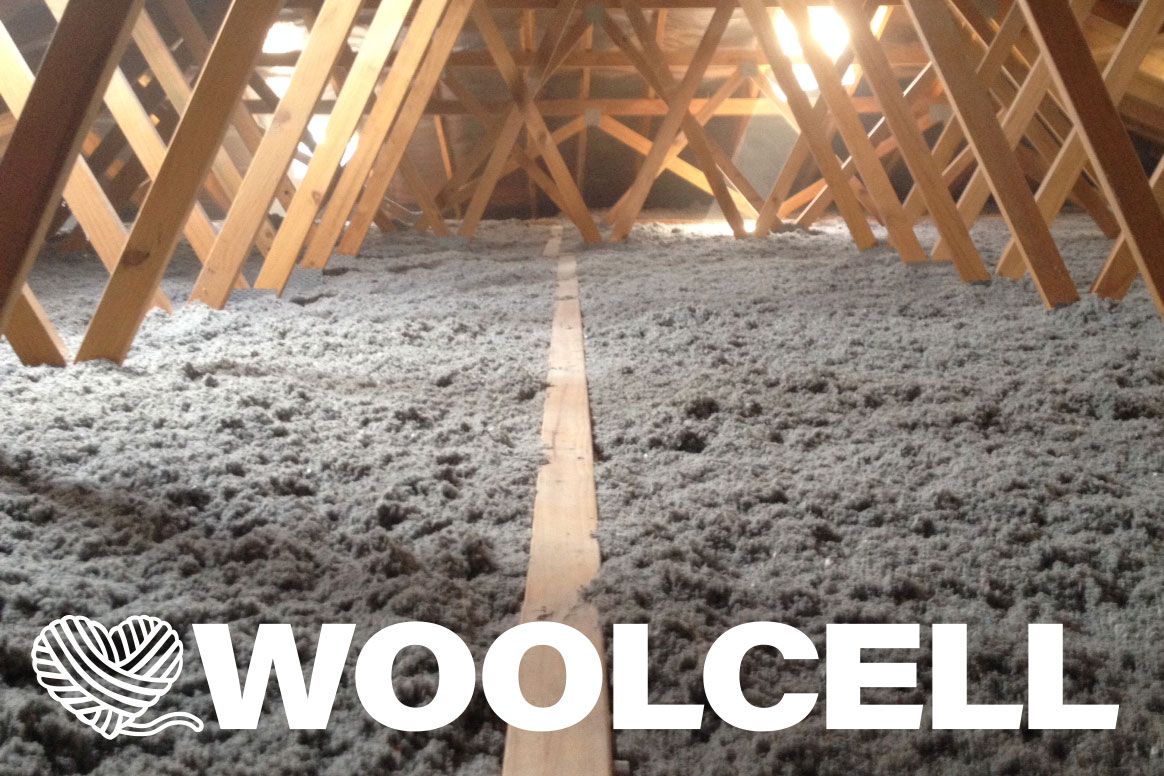
Woolcell Roof Insulation

If you’re planning to get insulation, often the first question that comes to mind is what’s the best insulation material.

Many customers ask about the options for insulation, and these two are often the top solutions: cellulose insulation and fibreglass insulation.

So, in this article, we will discuss both fibreglass and cellulose and identify which is better in terms of efficiency, affordability and sustainability, among other factors.

What is cellulose insulation?

Cellulose insulation is a sustainable insulation material most commonly made from recycled paper.

To make cellulose insulation, the paper is shredded, mixed with borax and boric acid (which makes it fire-resistant) and then broken down into fibres that provide insulation.

In Australia, Cellulose is combined with wool to create Woolcell. Woolcell is more effective than regular cellulose, as the wool helps it keep its ‘loft’ over a longer time period.

What is fibreglass insulation?

Fibreglass insulation is mostly made of fine glass fibres and sand. It insulates by trapping air inside these fine fibres to slow the transfer of heat.

Fibreglass can be used in its blanket form (or “batts”) or loose-fill. It comes in different thicknesses that determine the resistance of the material to heat flow.

What is better: cellulose or fibreglass insulation?

When it comes to sustainable insulation materials, cellulose and fibreglass are both considered safe to use in the home, though cellulose is widely considered the more sustainable option.

When deciding which one to use for your home, here are the factors that you need to consider:

  • Environmental impact
  • Cost
  • R-value
  • Safety
  • Overall performance

Let’s explore these factors and discuss each option’s features and benefits.

Comparing cellulose and fibreglass insulation

1. Environmental Impact

Both cellulose and fibreglass can be sourced using recycled materials, but where fibreglass is commonly 30%, cellulose is as high as 75%.

Cellulose is also made more sustainably, as opposed to fibreglass which requires extreme heat and toxic compounds to create. This is an important consideration when evaluating the overall sustainability of a product.

Woolcell in particular is very environmentally friendly as the wool used is 100% natural Australian wool. When combined with borax and boric acid being naturally occurring salts, and the paper used is recycled, Woolcell is an almost 100% natural or recycled product.

So, this round ends in a tie.

2. Cost

In Australia, the cost of cellulose and fibreglass per square metre is almost the same. Both are cost-effective solutions and will protect your home from the heat in the summer, as well as the cold in the winter.

So, for this round, it’s also a tie.

3. R-value

A higher R-value means better resistance to airflow, therefore preventing heat from escaping. So this is quite an important deciding factor.

While both cellulose and fibreglass have insulation and respectable R-values, cellulose, especially when mixed with other materials like wool, has a better lifetime R-value.

This is because cellulose is most often blown-in, which is a style of insulation that creates a more effective thermal barrier because the blown-in fibres settle into hard-to-reach places.

Fibreglass is most often installed as batts, which can be less effective because there are gaps between them, especially when installed through DIY rather than a professional.

Cellulose insulation wins this round.

4. Safety

While both materials are classified as safe for households, fibreglass is known to have some drawbacks.

Firstly, the glass fibres and some of the chemicals used in the manufacturing process can act as irritants when inhaled or touched with bare skin. For this reason, fibreglass should always be handled with the proper protective gear.

Cellulose, on the other hand, is made primarily with paper and natural materials, making it safer to handle.

In terms of fire resistance, cellulose is the clear winner. It is 57% more flame retardant than fibreglass batts and is even more flame retardant than an uninsulated home. That means cellulose makes your home safer in a fire than if you didn’t have insulation at all!

The last thing to consider for insulation safety is mould resistance. Again, cellulose, in particular Woolcell, wins out. That’s because the wool in the material is more breathable, resisting the trapping of moisture that leads to mould growth.

So on all fronts, cellulose is the safer insulation option.

5. Overall Performance

While both materials are good for home insulation, a study at the University of Colorado found that a cellulose-insulated building uses 26.4% less heat than a fibreglass-insulated building. The study also concluded that cellulose performs 36% better than fibreglass.

Once again, cellulose takes the final round.

So, which insulation wins?

Both materials provide the following benefits of home insulation:

  • Better energy efficiency
  • More comfortable home
  • Reduced utility costs

However, cellulose insulation beats fibreglass insulation across these factors.

It also takes the ethical high ground with its much more sustainable manufacturing process, being made of more recycled and natural materials, therefore creating a more energy-efficient home once installed.

So, if you’re planning to get a cost-effective insulation solution for your roof, floors, or walls, choosing a great cellulose insulation option and the help of professional home insulation experts will give you the best value for your money.

Woolcell is the best insulation for your home

With cellulose beating out fibreglass as the preferred insulation material, you’re probably wondering what kind of cellulose insulation to use for your home.

Luckily, this decision is easy – use Woolcell!

Woolcell is Australia’s preferred cellulose/wool insulation product:

  • 100% Australian designed and manufactured, and using 100% Australian wool
  • Woolcell resists both mould and vermin, helping people with asthma or allergies
  • The wool naturally helps it retain its ‘loft’, making it retain its effectiveness far longer than alternatives that compress over time

If you’re interested in having Woolcell insulation installed, it will work far more effectively if you have it done professionally.

Get in touch with 4 Seasons Home Insulation to book your free Woolcell quote today.

Or for more information, visit our website.

Learn about our Central Coast services:

Learn about our Sydney services:

Learn about our Newcastle services:

Is Your Home Embracing Sustainable Insulation?

house drawing on the top of photo of bushy area

Is home insulation sustainable?

It’s a common question asked by many customers when considering the environmental impact of their insulation materials. As the world increasingly focuses on prioritising sustainability, it’s smart to explore potential insulation options that are effective, as well as eco-friendly.

In this article, we will discuss sustainable insulation at length, consider its benefits, and address any concerns regarding its effectiveness, safety, or insurance coverage.

What is Sustainable Insulation?

Sustainable insulation refers to insulation materials that are produced with a minimal environmental impact and are made at least using partly recycled materials via sustainable methods. Unlike traditional insulation options, sustainable insulation is designed to: minimise the consumer and producer’s environmental footprint and contribute to an overall healthier ecosystem.

Is Sustainable Insulation Covered By Insurance?

Yes, it sure is. It isn’t only consumers that recognise the positive impacts and effectiveness of sustainable insulation – many regulators and insurance companies do as well!

Sustainable insulation products like Insulbloc are generally covered by insurance just like any other type of insulation, provided that it adheres to installation, safety and building guidelines.

Why is Sustainable Insulation Growing in Popularity?

With growing awareness of climate change and an increased emphasis on environmental footprint, sustainable insulation has gained significant popularity in recent years. Ultimately this eco-friendly alternative provides a range of benefits that contribute to the rise in its use, including:

1. Environmental Friendliness

Sustainable insulation materials, such as the recycled polystyrene inside our champion Insulbloc product, have a much lower environmental impact than other insulation alternatives.

By repurposing waste materials, sustainable insulation products can reduce the demand for non-sustainable resources and minimise the carbon footprint associated with production – hence the huge shift toward these products.g

2. True Energy Efficiency

Like all other insulation, the role of sustainable insulation is to prevent heat loss in winter and heat gain in summer. By effectively controlling thermal transfer, sustainable products like Insulbloc reduce the need for excessive heating or cooling, resulting in substantial energy savings and lower utility bills.

By opting against sustainable insulation, much of the environmental benefits of energy efficiency are lost in the production process, in some cases even cancelling out the initial positive impact completely.

3. Indoor Air Quality

All effective insulation enhances indoor comfort levels by maintaining a consistent temperature throughout the year.

What separates sustainable insulation like Insulbloc are materials such as cellulose that contribute to improved indoor air quality by minimising the infiltration of outdoor pollutants and reducing the potential for condensation and mould growth.

In other words, sustainable insulation kills two birds, with one stone and is the far more comprehensive and people-friendly solution.

Interested in Insulbloc: Our Champion Sustainable Product?

At 4 Seasons, we take pride in offering Insulbloc as our champion sustainable insulation product. Insulbloc is an outstanding cellulose insulation option that offers:

The Highest R-Value in Australia

The polystyrene blocks settle to create a locked layer of insulation, giving it the best R-Value in Australia.

An Easy Installation Process

Insulbloc can be pumped into wall cavities to create effective insulated layers in even the hardest to reach places.

Effectiveness Against Mould, Pests, and Fire

Insulbloc is resistant to the spread of fire, dust, moisture and vapour, fungi and bacteria, mould and mildew, and vermin!

Proud Australian Roots

Insulbloc is a local Australian invention, supporting the domestic insulation industry, ensuring faster product delivery and issue resolution compared to overseas alternatives

Experience the Difference with Sustainable Blown-In Insulation Today

Now that you have everything you need to know about the advantages of sustainable insulation, it’s time to reach out to the experts to find out how you can get the full benefits of sustainable blown-in insulation in your home.

Get in touch with 4 Seasons Home Insulation to book your free quote today.

For more information, visit our website.

View our Central Coast services:

View our Sydney services:

View our Newcastle services:

A Guide to Blown-In Insulation: Appearance, Advantages, Types and More

Hand with Insulation

Good insulation is an important part of any home. Without it, you’d have to use a lot more energy and electricity just to stay warm in winter and keep cool in summer.

Over the years, the different types of insulation we use (e.g. fibreglass or cellulose insulation) and the methods we use to install them have evolved, with each iteration designed to improve the effectiveness of the insulation and contribute to a higher R-Value for your home.

Today, we want to talk about an effective form of insulation, known as blown-in insulation.

In this guide, we’re going to discuss everything you need to know about blown-in insulation, including its appearance, the different types, and why it might just be the best option for insulating your home.

What is blown-in insulation?

Blown-in insulation is a type of insulation that’s installed using special equipment that blows the insulating material into your wall or roof cavities. The compact size of the material means that it’s capable of getting into even the smallest and most hard-to-reach places in your walls or roof cavity. This ensures the complete and proper thermal insulation of your home.

What does blown-in insulation look like?

When it comes to how it looks, blown-in insulation’s appearance does vary depending on the specific type of insulation material used. For example, blown-in cellulose insulation looks noticeably different to blown-in fibreglass insulation.

In general, however, blown-in insulation typically looks like little loose specks of material that have clumped together to form a thick and effective layer of insulation across the entire area that it covers.

What are the advantages of blown-in insulation?

There are several key advantages to using blown-in insulation that make it the insulation of choice for so many homeowners in Australia. Let’s look at some of these key benefits in more detail:G

Blown-in insulation is super easy to install

Blown-in insulation is great for both new and existing homes. Rather than having to work with rolls or batts, we simply load up our specialist equipment and blow the insulation material directly into each area required, helping to create a nice even thermal barrier for your home.

Of course, it’s always best to leave installing your insulation to the professionals.

Blown-in insulation is much more energy-efficient

One of the biggest problems with other forms of insulation is the issue of gaps and thermal bridges in your insulated layers. When this happens, it can allow heat to escape from a warm home or penetrate a cool home in the summer.

With blown-in insulation, however, the material used is so small that it can easily fill in all those hard-to-reach and tight spaces in your wall or roof cavities and help to provide a more complete layer of thermal protection for your home.

Blown-in insulation is better for retrofitting existing homes

Given that blown-in insulation is much more effective at filling all those tight and hard-to-reach spaces, this means it’s often the preferred method for installing insulation in old or existing homes.

Once a home has already been built, access to cavities can often be restricted, and the existing insulation already in place may make it difficult to reach and fill any gaps in the thermal barrier.

Having the ability to blow the insulation material through a hose and directly into these difficult-to-access spots makes it much more suited to the job than other installation methods.

It’s also much more cost effective for older or existing homes because installing batts in tight or low cavity roof spaces can be very expensive.

What are the different types of blown-in insulation?

There are two main types of blown-in insulation, each offering a great R-Value for your home:

Cellulose/Woolcell insulation

Cellulose insulation is an environmentally friendly option for blown-in insulation, typically made from recycled paper-based materials, such as newspapers and cardboard. It’s treated with fire-resistant chemicals, making it super safe to install in your home, and its outstanding thermal performance helps to keep energy costs down.

Fibreglass insulation

As the name suggests – and much like the old-school batts that you may picture when you first think of home insulation – blown-in fibreglass insulation is made from tiny glass fibres that help to provide an effective thermal layer within your walls or roof cavity.

While it remains a popular choice amongst homeowners, it’s not as environmentally friendly as cellulose insulation.

Experience the difference with blown-in insulation today

Now that you have everything you need to know about the types, the advantages, and the blown-in insulation appearance, it’s time to reach out to the experts to find out how you can get the full benefits of blown-in insulation in your home.

Get in touch with 4 Seasons Home Insulation to book your free quote today.

For more information, visit our website.

Find out more about our Central Coast services:

Find out more about our Sydney services:

Find out more about our Newcastle services:

Is Insulation Flammable? The Definitive Answer

a house with a sunset in the background

“Is insulation flammable?”

It’s a common question for homeowners, but one that is often shrouded in mystery and misinformation.

The answer, it might not be surprising to hear, is that it depends. Some insulation materials are more flammable than others, and how well insulation is installed can be a factor as well.

Read this article for definitive answers, including comparisons of the flammability of each main insulation types,

The Flammable Insulation Myth Busted

Many people believe that insulation is flammable, and for a long time they wouldn’t have been wrong. Many flammable materials have been used as insulation products throughout history. This makes people especially concerned about the flammability of insulation in old houses.

Cellulose, which is made primarily of paper, has an undeserved stigma because its earlier versions were highly flammable before flame retardants were introduced.

In reality though, with modern building codes, R-Values and regulations, a highly flammable insulation simply cannot exist in the Australian market.

What is Flame Retardant Insulation?

Most inherently flammable materials can be treated with flame retardant chemicals. When applied to insulation, these chemicals usually work in two ways.

1. Prevent Vapours

The first kind of flame retardant aims to prevent a fire from starting in the first place. It does this by interrupting the atomic chain reaction that leads to the ignition of the material.

2. Charring

Charring is designed to stop the flame in its tracks. When fire burns the surface of a retardant material, it forms a tough char layer of carbon, rather than burning all the way through. This layer not only protects the insulation (and the timber framing behind it), but it also limits the amount of smoke that can escape from the material.

Which Insulation is the Most Flame Retardant?

Cellulose

Cellulose insulation is now considered one of the most flame retardant insulations on the market.

Flame retardant chemicals mean modern cellulose barely melts at all. While flames will char the surface and eventually cause loss of integrity, this process takes far longer than alternative insulations. In fact, it has a higher melting threshold than some metals, including coins.

Controlled tests have proven cellulose to be 57% more flame retardant than fibreglass insulation. However, more surprisingly, they have also proven it to be superior to uninsulated buildings. That means installing cellulose insulation actually makes your house safer than having no insulation at all.

Polyester

Polyester insulation functions similarly to cellulose when it burns. It melts very slowly, and doesn’t spread the flame at all. In fact, it’s designed to self-extinguish once it’s no longer being directly exposed to a flame. It is also odourless and gives off comparatively little smoke compared to other insulations on this list.

Polystyrene

Polystyrene melts quickly under flame. This is a concern because of how quickly it may expose timber framing. On the other hand, it doesn’t continue to burn at all once the flame is removed, and it releases relatively mild amounts of smoke.

Fibreglass Batts

While fibreglass may not spread flames, it doesn’t withstand them very well either. Fibreglass will quickly melt away and lose shape when direct flame is applied. This then exposes the timber framing to the fire.

More concerningly, many fibreglass batts have paper linings on the internal facing side, This paper can quickly catch fire and add to the spreading flames.

Foam (Closed Cell)

Closed cell polyurethane foam is a difficult insulation to judge. While it does melt away, it doesn’t smoulder at all once the source of the flame is gone. While this may sound positive, it unfortunately yields a thick, black smoke while burning and afterward. If this smoke breaches the internal walls of the home, it can worsen the chances of smoke inhalation.

Contact a Professional Insulation Installer

Aside from the flame retardant nature of most Australian insulation materials, there is another factor in how well your insulation can protect your home during a fire.

How well it is installed!

Insulation that has been professionally installed offers superior flame resistance, and will be much better at keeping your home temperate and comfortable.

Thankfully, at 4 Seasons Insulation we are experts at installing insulation. Our insulation will be effective for the entire lifetime of your home. Contact us today for a quote and advice about the best insulation option for your needs.

For more information about our services, visit our website.

Browse our Central Coast services:

Browse our Sydney services:

Browse our Newcastle services:

When was Insulation Invented? The Complete History of Insulation

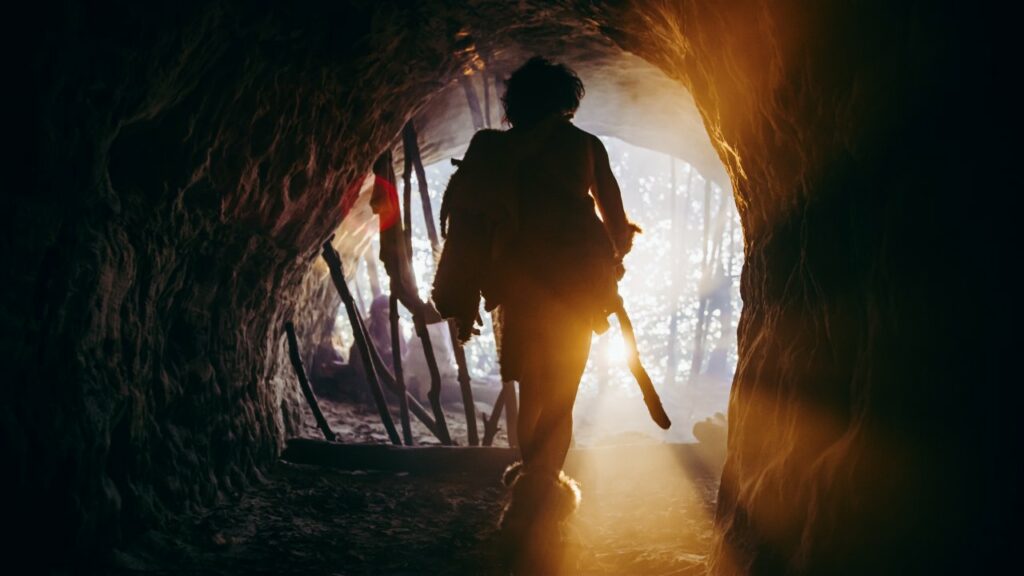
Cave man walking toward the exit of a cave

It all began with food, water and shelter. The three basic needs that keep us alive. We constantly appreciate what we eat and drink. We drool over what we’ll have for lunch and we delight over our morning coffee.

But what about shelter?

Our homes are something we take for granted now, but they’re still as important for keeping us safe from the elements as they were in palaeolithic times.

Just like food and drink, our ability to enjoy our homes has advanced throughout the ages. This has led to the wonder of modern insulation. It is insulation that lets us see homes as places of leisure, rather than places to survive.

But when was insulation invented? Learn that and more in our complete history of insulation.

What is Insulation?

Asking this question in modern times will lead you to a list of the best insulation products. But in the context of history, that’s a bit limiting. At its core, insulation can be anything that stops hot or cold temperatures from moving from one place to another.

The question “when was insulation invented?” is difficult to answer because we’ve been insulating ourselves since the dawn of time. As you’ll see, many different materials have been used to insulate homes throughout history, and they all count as forms of insulation.

The Palaeolithic Period

Cave man walking toward the exit of a cave
A palaeolithic cave dwelling with branches being added to insulate the entrance.

The palaeolithic period is the scientific name for what you imagine when you think of ‘caveman times’. Long before R-Values and comfortable houses, it was a time when humans had to struggle for everything.

Hunting was quite literally hit-or-miss, predators were everywhere, and the heat or the cold could be a death sentence. Early humans barely had any tools, so homes were usually just caves or natural shelters where they could get out of the sun or the rain.

But even these people made attempts to insulate themselves. Leaf litter and animal furs were used for makeshift mattresses to protect from the cold ground below, and branches could be bundled together to cover cave openings.

Despite their limited understanding of the world around them, it was instinctual for early humans to want to keep the warmth in, and keep the cold out.

Ancient Egypt

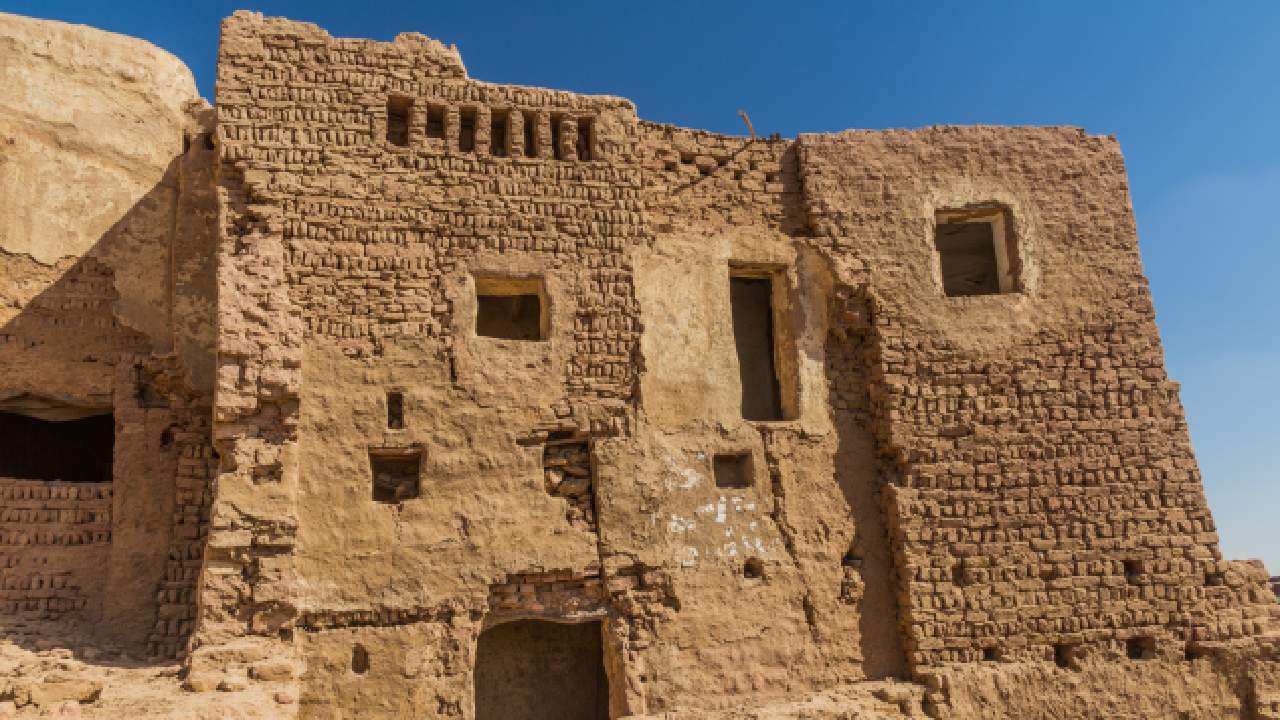
Ancient Egyptian mudbrick house ruins
Ancient Egyptian mud brick ruins.

A good answer for the “when insulation was invented?” question is the ancient Egyptian period. That’s because they were the first to incorporate insulation into the building process.

Ancient Egypt was much more fertile and temperate than it is today, so the insulation needs of ancient Egyptians were actually quite complex. In the summer months it was incredibly hot and dry, but at night and during winter it could get very cold.

To solve this, they ingeniously created mud bricks, which acted like stone blocks, and created their homes with them. These blocks were able to stop the cold air coming in at night, but they also retained less heat than stone in summer which stopped homes from overheating during the afternoon.

Ancient Greece

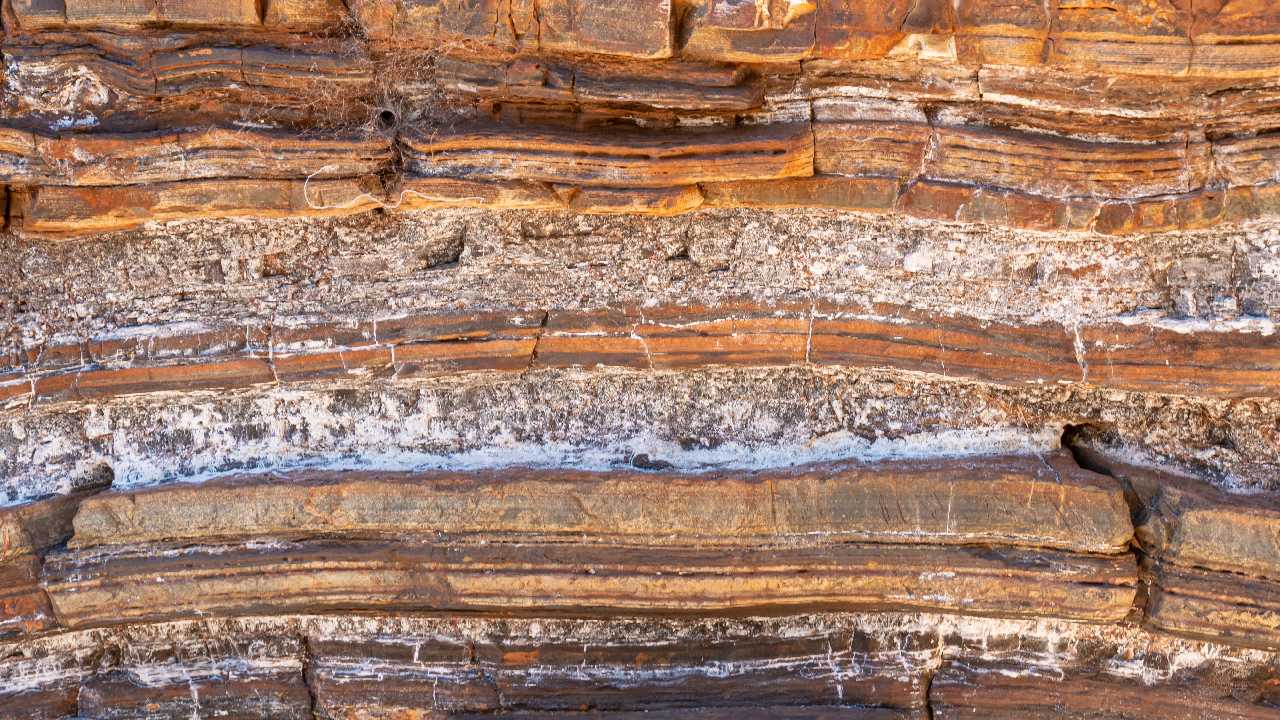
Asbestos fibres naturally occurring in a rock face
Asbestos fibres as they naturally occur between rock layers.

If the Egyptians were the first to integrate insulation into the construction process, the ancient Greeks were the first to create a genuinely original insulation product.

Asbestos, which means “inextinguishable” in ancient Greek, is a mineral first used for building purposes by the Greeks. “Inextinguishable” is strangely misrepresentative, because unlike wood or plant-based materials, asbestos is actually incredibly flame resistant. Historians chalk this up to the meaning of the word evolving.

Most early insulation materials were either highly flammable or easily destroyed by flame, so finding a naturally occurring, fire resistant mineral like asbestos was a major breakthrough in the ancient world.

Asbestos could also be woven into walls and roofs because it naturally occurs in a fibrous state, making it easy to weave. This paired well with another discovery attributed to the Greeks – realising they could regulate temperatures with air gaps.

By intentionally using air gaps in their homes, they could ventilate them in warmer months while closing them off in colder months to trap in the warm air. The malleability of asbestos meant they could easily shift it depending on the season, the maximise or minimise airflow.

The Romans

Ancient Roman pipes discarded in a pile at a ruin site
Ancient Roman pipes – though their cork insulated lining has been lost to time.

While the Greeks were the masters of insulating structures, the Romans invented insulation for specific parts of the home.

The Romans were pioneers of plumbing (which is a whole other story), but they quickly realised that transporting warm water was difficult because it would cool in transit. Given their love for bath houses, this was a big problem. No one likes a cold bath!

Ingeniously, they discovered that they could insulate pipes by wrapping them in cork casts. Cork is lightweight and very easy to shape, which made it ideal as a pipe lining.

As a concept, insulating pipes is still used today, and can even be thought of as a precursor to the insulated wiring that’s running through your home right now.

The Vikings

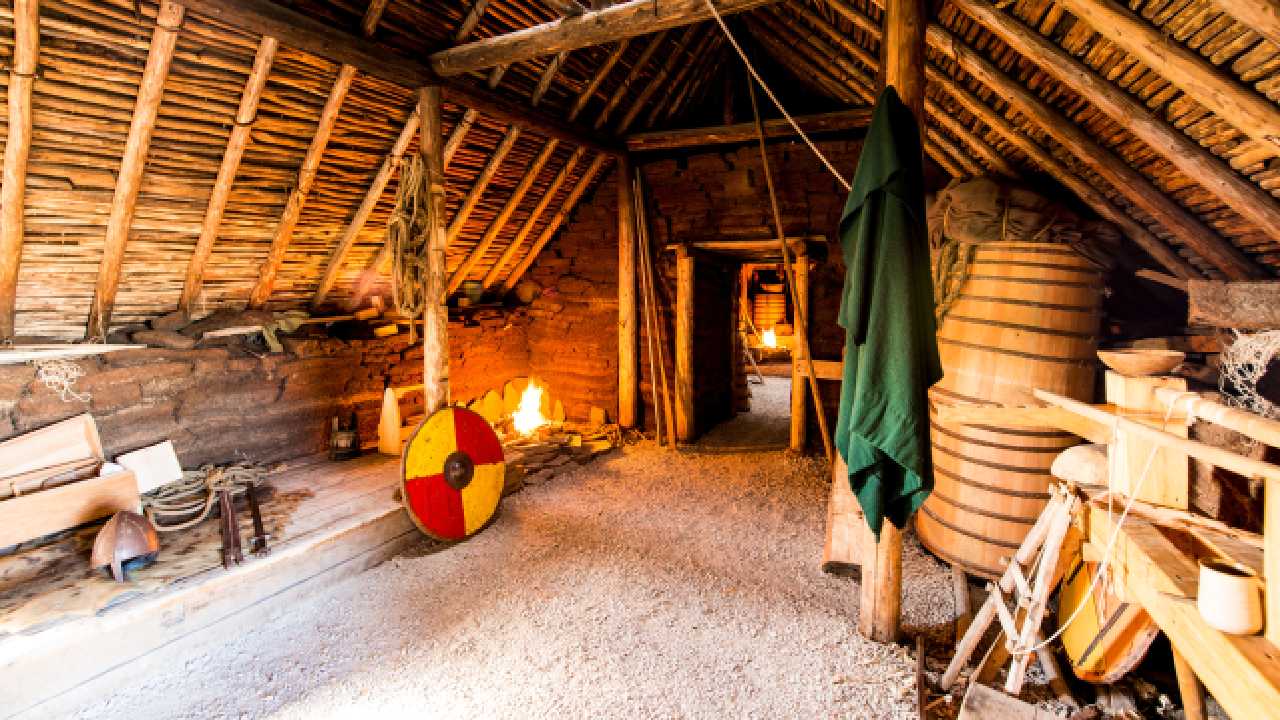
Inside of a Viking building with a fire, shield and other Viking objects
The inside of a wooden Viking dwelling.

Compared to the accolades of the Greeks and the Romans, the Vikings might not seem to have advanced the history of insulation very far. But you have to take their climate into account.

In the fjords of Scandinavia, temperatures for much of the year fall well below 0℃. The Vikings also built primarily with wood, which they had an abundance of, rather than mud and stone. To keep the bitingly cold climate out of their great halls, they used a special mud resin to seal the gaps between logs and beams.

Unlike the materials used by their predecessors in history, wood degrades quickly over time in harsh conditions. This meant air gaps would constantly appear which lead to icy drafts. With outdoor temperatures so cold, their use of the mud resin was vital to keeping their buildings insulated enough for them to survive.

The Middle Ages

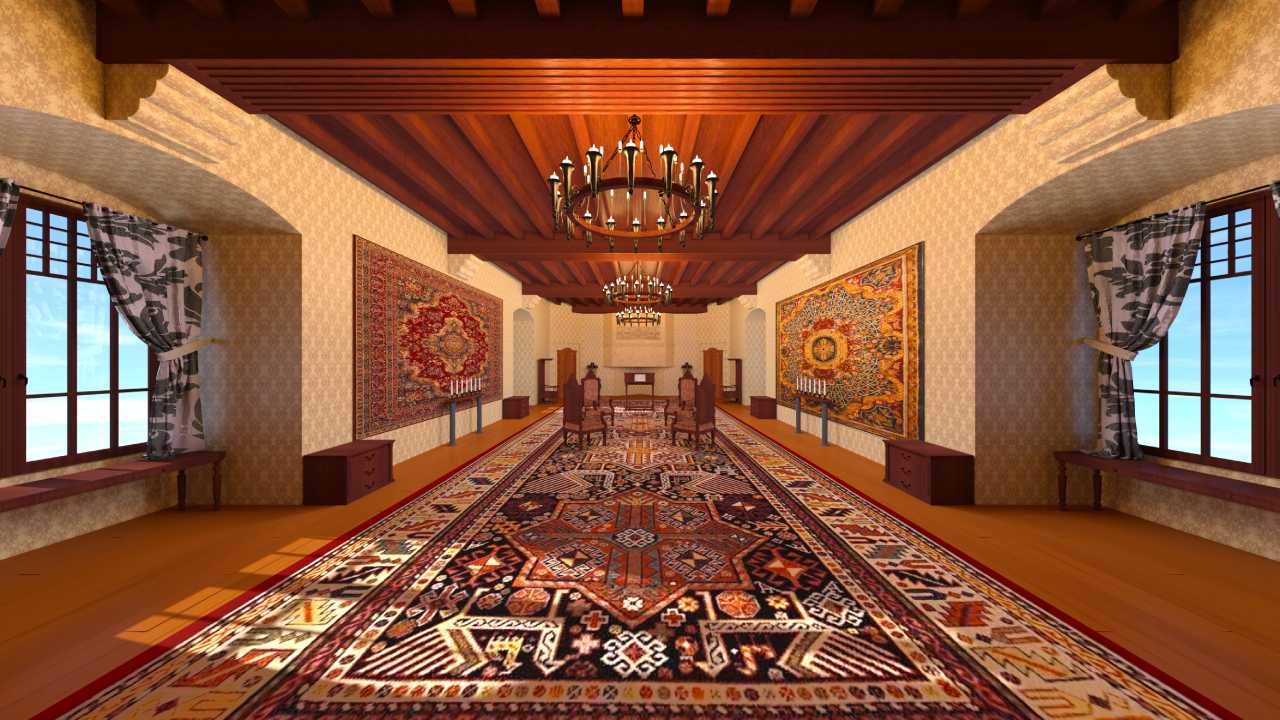
Tapestries and rugs being used for insulation in a Middle Ages style building
A medieval building insulated with woven tapestries and rugs.

The middle ages are known for their many wars, but for this article one war in particular stands out – the war against drafts!

By this point in history, buildings were starting to become massive! This meant there were a lot more large spaces that were difficult to keep warm.

Similar to the Vikings, folks in the Middle Ages realised drafts were leaching out all the warm air their grand fireplaces were producing. Unlike the Vikings, their solution was much more elegant.

Enormous woven pieces of cloth, known as tapestries, were hung over the walls of Middle Ages buildings. Similarly, rugs that spanned entire rooms were used on floors. Each of these were decorated with dyes, and often depicted important events like battles or scenes from the Bible.

These pieces of art were quite heavy, and were extremely effective at insulating large rooms. To this day, they hold the crown of the most stylish form of insulation ever invented!

The Industrial Revolution

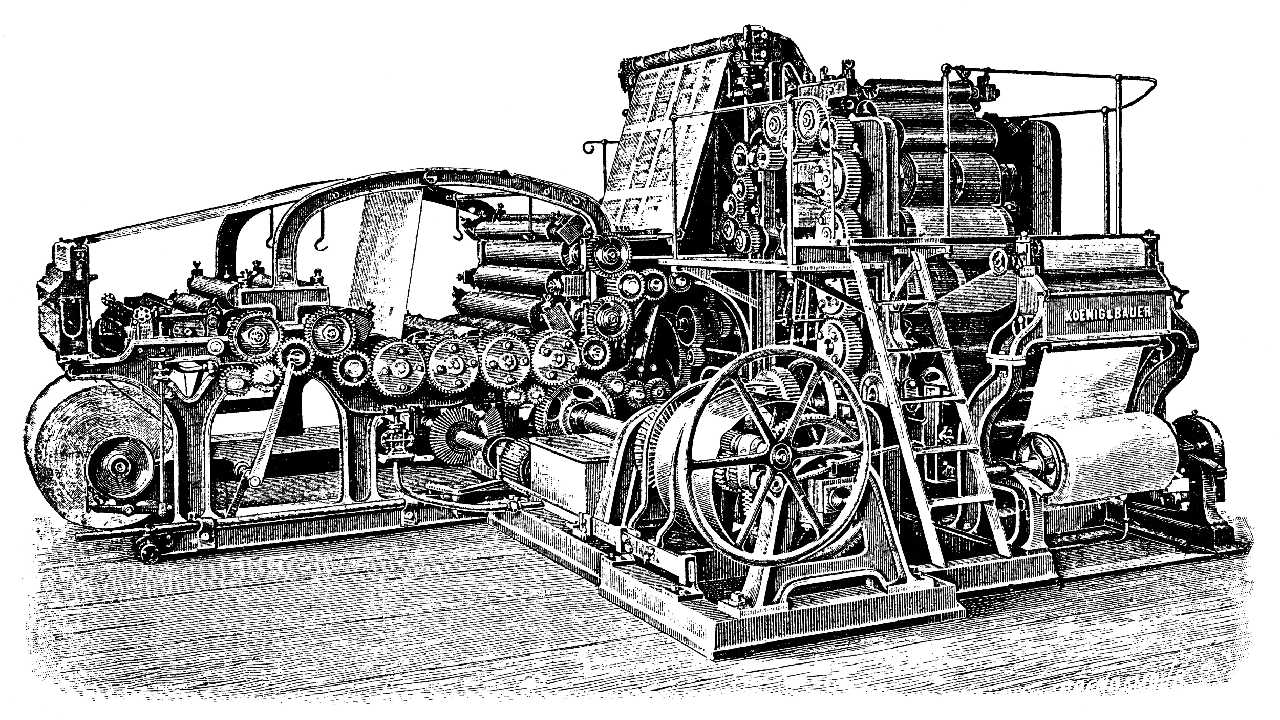
A black and white sketch of a 19th Century printing press
A sketch of a 19th century newspaper printing press.

The industrial revolution saw the second wind of asbestos. As factories began to spring up all over Europe and America, the need for a versatile, heat resistant pipe insulation also grew.

Once it was being mass produced for pipes, manufacturers from other industries caught on to how cheap it was and started using it in various household objects, including as insulation.

Asbestos wasn’t the only form of insulation that grew in popularity throughout the industrial revolution era. One of the technical innovations of the industrial revolution were large scale printing presses that could manufacture newspapers on a massive scale.

Suddenly, people had huge amounts of paper at their disposal, and it quickly got used as insulation for filling cavities in roofs, walls and floors. Unbeknownst to the people using this wonderful new resource, they had stumbled on what would eventually become cellulose insulation.

The 30’s – 40’s

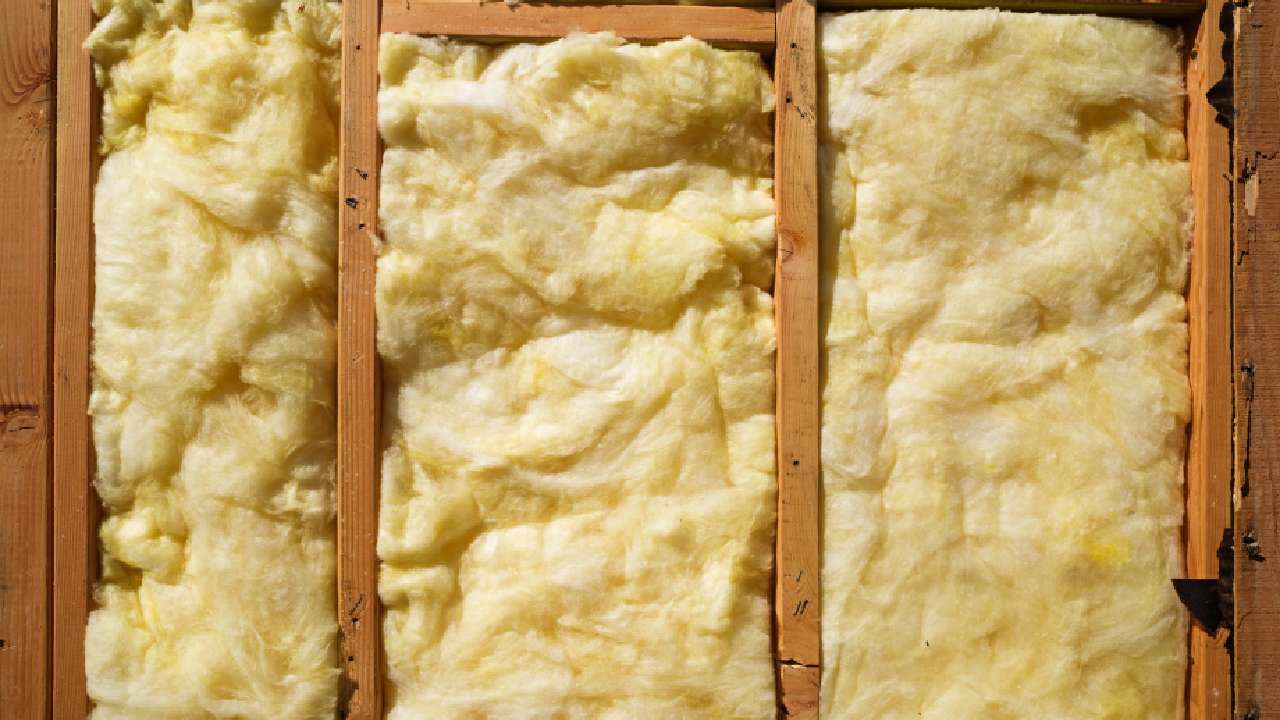
Glasswool, or fibreglass insulation, placed between timber frames
The modern version of glasswool insulation.

After its accidental discovery a century earlier, cellulose dominated the insulation landscape. It was easy and cheap to manufacture, and could be shredded or turned into paper mache to be easily applied. Unfortunately, it also had a major drawback that quickly saw it fall out of favour.

Cellulose was highly flammable. Since homes were now commonly containing technologies like electricity, fires from primitive wire faults were becoming much more common. Any home with cellulose insulation was practically a tinder box if something caused a spark.

Instead, a new form of insulation was invented. Glasswool, or fibreglass as it is most commonly known, was discovered in 1930 and is naturally flame retardant. It surged in popularity and largely replaced cellulose as the preferred insulation for most homes.

The 50’s – 80’s

Cellulose insulation between timber frames
The modern, flame retardant version of cellulose insulation.

While fibreglass remains a common choice today, the second half of the 20th century saw advancements in flame retardant technology. These made cellulose viable again because its flammable nature had been its only serious drawback. Then, in the early 1980’s, a third contender emerged.

Polyurethane spray foam had been used by militaries across the world for decades, but had finally made its way to the residential market. Its popularity soared because of its flame retardant qualities and how easily it could be installed. Rather than being fixed in place, it could be sprayed in cavities. This made it incredibly versatile.

The Present Day

Insulbloc insulation in a brick wall
INSULBLOCⓇ insulation, the highest R-Value insulation in Australia.

In the present day, cellulose, fibreglass and polyurethane foam remain the most popular insulations in the world. But a growing push to become more sustainable is seeing this balance shift again.

In a strange way, the history of insulation has come full circle. Insulation was invented to protect ourselves from nature. Now, we want to make sure that we are protecting nature from our own products.

A growing emphasis on insulation needing to be recyclable has seen the rise of products like INSULBLOCⓇ. INSULBLOCⓇ is made entirely from recycled polystyrene, taken from old insulation. Products like this are only the start of a market shift towards awareness about our environmental impact.

4 Seasons Insulation

4 Seasons Insulation may not have invented insulation, but they sure have perfected the art of installing it!

For underfloor, wall cavity or roof insulation, as well as top-up insulation and old insulation removal, 4 Seasons offer a high quality service. They also offer INSULBLOCⓇ, the most effective recycled insulation on the market.

Get in touch for a quote today.

Check out our Central Coast services:

Check out our Sydney services:

Check out our Newcastle services:

Insulbloc Insulation Explained

Insulbloc insulation in a brick wall

If you are considering insulation options, there is a good chance that you have come across Insulbloc. A new and innovative technology, Insulbloc has the highest wall insulation rating available. Because of its unique design, installing Insulbloc is simple and effective, making it a great choice.

Read on to learn more about how Insulbloc works and why it would be ideal for your home.

Why is Wall Insulation Important

Wall insulation helps control the temperature of your home. It limits the movement of hot and cold air and keeps your home temperate in both warm and cool weather. This will help you save on electricity, as your heating and cooling systems won’t need to combat excessive heat loss or gain.

Learn more about how insulation works.

In Australian conditions, this is essential. Westerly walls can heat up at an alarming rate during hot Australian summers. This isn’t just an inconvenience – it can majorly affect your ability to live in and enjoy your home. 

Wall insulation can also help minimise noise in your home, and reduce condensation, so it is a critical part of any home design. 

What Is Insulbloc?

As one of the most eco-friendly and effective insulation options on the market, Insulbloc is quickly becoming a popular choice. It is Australian-made and designed to suit Australian homes in both the heat and the cold.

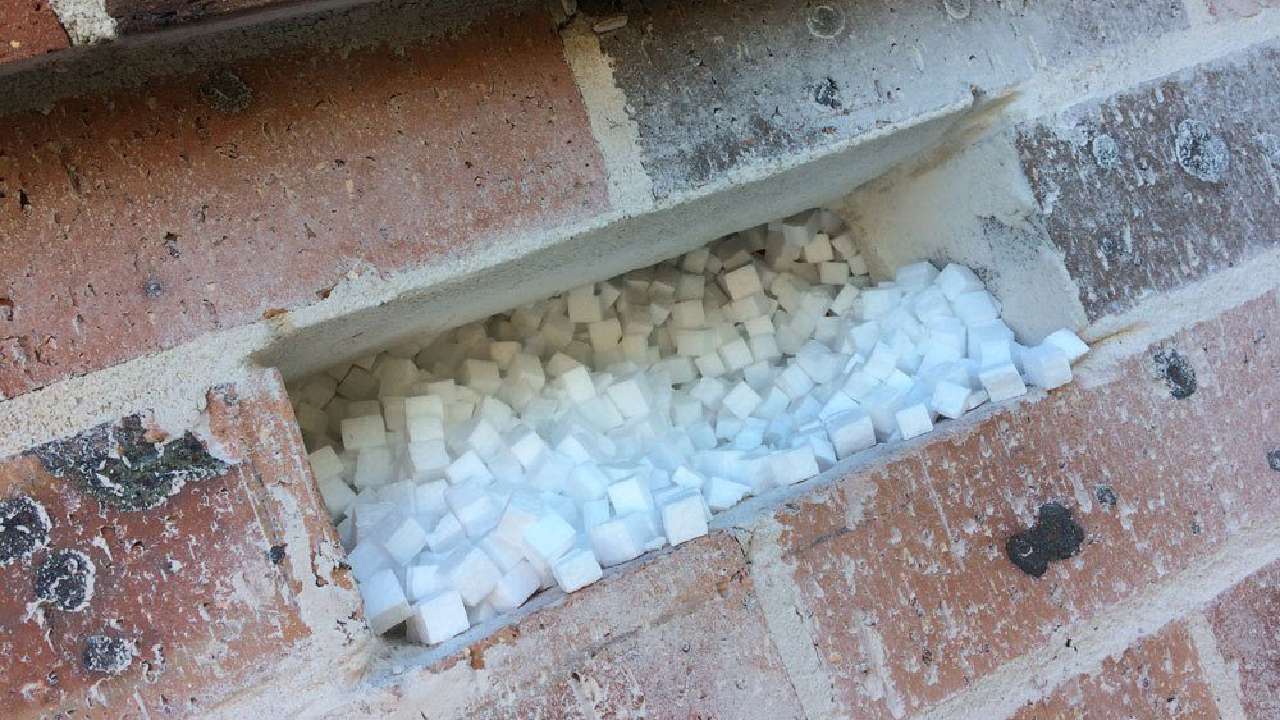
Insulbloc is an insulation made from small cube blocks of recycled polystyrene. These blocks can be pumped into wall cavities and fill small or difficult to reach spaces, such as around plumbing pipes. These cubes then lock together as they settle, becoming a gap-free layer of insulation.

Gaps can greatly hinder your insulation’s ability to keep hot air in or out, and will ultimately cost you more in heating and cooling bills. The gap-free nature of Insulbloc is why it has the highest R-Value (thermal resistance rating) in Australia. 

Learn more about R-Value ratings.

Insulbloc is also fantastic at combating vapour, helping keep the air in your home clean and dry. Because there is no glue required to keep Insulbloc in place, you are not adding moisture into your wall cavities and the risk of wetting any exposed electrical wires is eliminated. 

What are the Benefits of Insulbloc

In addition to its high insulation rating and unique block style, Insulbloc has many attractive benefits that make it your ideal choice. 

Multiple Resistances

Insulbloc resists several factors that can damage insulation or the home itself. These include:

  • Does not spread fire
  • Dust
  • Moisture and vapour
  • Fungi and bacteria
  • Mould and mildew
  • Vermin

Fire retardant insulation is one of the key differentiating factors between good and bad insulation. While no one wants to think about their home on fire, it is an unfortunate reality. Especially in Australia where bushfires are also common. 

The polystyrene blocks don’t contain formaldehydes or flammable particles. This ensures that Insulbloc has zero spread of flame. 

You can feel more secure in an Insulbloc-insulated home, safe in the knowledge that it won’t contain harmful allergens or organisms that could make your family sick. 

Insulbloc is hydrophobic, which means it resists water vapours and won’t spread damp through your home. You won’t have to worry about excess moisture degrading your timber, or creating unpleasant odours. Rest assured that both your family and your house will stay healthy.

Structurally Innovative 

From a builder’s perspective, Insulbloc also has several great benefits. It’s lightweight and does not push on inner wall linings. 

Its unique installation method also limits damage to the façade of a home. In most instances, simply removing a brick or drilling a single hole, the installer will have enough access. The brick or hole is replaced, leaving no trace. 

Australian Product

Insulbloc is also a local Australian invention. By choosing it you are supporting our own insulation industry. Not only that, product delivery and issue resolution will be much faster than if you use overseas alternatives. 

Where can Insulbloc be Used?

Insulbloc is perfect for existing walls and structures. If you have recently bought a new home, or want to insulate your current one, you don’t want the fear of damage to your home’s façade to limit your options. You also don’t want to have to tear down internal gyprock walls to install batts.

With Insulbloc you get the best of both worlds – high thermal protection and a ‘without a trace’ install. 

Conclusion

At 4 Seasons Home Insulation, our experts recommend Insulbloc as an eco-friendly, high R-Value material that has a huge range of benefits. If you want to learn more about our wall insulation service, click here. 

If you are ready to move forward with an installation, get in touch with us today!

Discover our Central Coast services:

Discover our Sydney services:

Discover our Newcastle services: