It’s a common question for homeowners, but one that is often shrouded in mystery and misinformation.
The answer, it might not be surprising to hear, is that it depends. Some insulation materials are more flammable than others, and how well insulation is installed can be a factor as well.
Read this article for definitive answers, including comparisons of the flammability of each main insulation types,
The Flammable Insulation Myth Busted
Many people believe that insulation is flammable, and for a long time they wouldn’t have been wrong. Many flammable materials have been used as insulation products throughout history. This makes people especially concerned about the flammability of insulation in old houses.
Cellulose, which is made primarily of paper, has an undeserved stigma because its earlier versions were highly flammable before flame retardants were introduced.
In reality though, with modern building codes, R-Values and regulations, a highly flammable insulation simply cannot exist in the Australian market.
The first kind of flame retardant aims to prevent a fire from starting in the first place. It does this by interrupting the atomic chain reaction that leads to the ignition of the material.
2. Charring
Charring is designed to stop the flame in its tracks. When fire burns the surface of a retardant material, it forms a tough char layer of carbon, rather than burning all the way through. This layer not only protects the insulation (and the timber framing behind it), but it also limits the amount of smoke that can escape from the material.
Which Insulation is the Most Flame Retardant?
Cellulose
Cellulose insulation is now considered one of the most flame retardant insulations on the market.
Flame retardant chemicals mean modern cellulose barely melts at all. While flames will char the surface and eventually cause loss of integrity, this process takes far longer than alternative insulations. In fact, it has a higher melting threshold than some metals, including coins.
Controlled tests have proven cellulose to be 57% more flame retardant than fibreglass insulation. However, more surprisingly, they have also proven it to be superior to uninsulated buildings. That means installing cellulose insulation actually makes your house safer than having no insulation at all.
Polyester
Polyester insulation functions similarly to cellulose when it burns. It melts very slowly, and doesn’t spread the flame at all. In fact, it’s designed to self-extinguish once it’s no longer being directly exposed to a flame. It is also odourless and gives off comparatively little smoke compared to other insulations on this list.
Polystyrene
Polystyrene melts quickly under flame. This is a concern because of how quickly it may expose timber framing. On the other hand, it doesn’t continue to burn at all once the flame is removed, and it releases relatively mild amounts of smoke.
Fibreglass Batts
While fibreglass may not spread flames, it doesn’t withstand them very well either. Fibreglass will quickly melt away and lose shape when direct flame is applied. This then exposes the timber framing to the fire.
More concerningly, many fibreglass batts have paper linings on the internal facing side, This paper can quickly catch fire and add to the spreading flames.
Foam (Closed Cell)
Closed cell polyurethane foam is a difficult insulation to judge. While it does melt away, it doesn’t smoulder at all once the source of the flame is gone. While this may sound positive, it unfortunately yields a thick, black smoke while burning and afterward. If this smoke breaches the internal walls of the home, it can worsen the chances of smoke inhalation.
Contact a Professional Insulation Installer
Aside from the flame retardant nature of most Australian insulation materials, there is another factor in how well your insulation can protect your home during a fire.
How well it is installed!
Insulation that has been professionally installed offers superior flame resistance, and will be much better at keeping your home temperate and comfortable.
Thankfully, at 4 Seasons Insulation we are experts at installing insulation. Our insulation will be effective for the entire lifetime of your home. Contact us today for a quote and advice about the best insulation option for your needs.
It all began with food, water and shelter. The three basic needs that keep us alive. We constantly appreciate what we eat and drink. We drool over what we’ll have for lunch and we delight over our morning coffee.
But what about shelter?
Our homes are something we take for granted now, but they’re still as important for keeping us safe from the elements as they were in palaeolithic times.
Just like food and drink, our ability to enjoy our homes has advanced throughout the ages. This has led to the wonder of modern insulation. It is insulation that lets us see homes as places of leisure, rather than places to survive.
But when was insulation invented? Learn that and more in our complete history of insulation.
What is Insulation?
Asking this question in modern times will lead you to a list of the best insulation products. But in the context of history, that’s a bit limiting. At its core, insulation can be anything that stops hot or cold temperatures from moving from one place to another.
The question “when was insulation invented?” is difficult to answer because we’ve been insulating ourselves since the dawn of time. As you’ll see, many different materials have been used to insulate homes throughout history, and they all count as forms of insulation.
The Palaeolithic Period
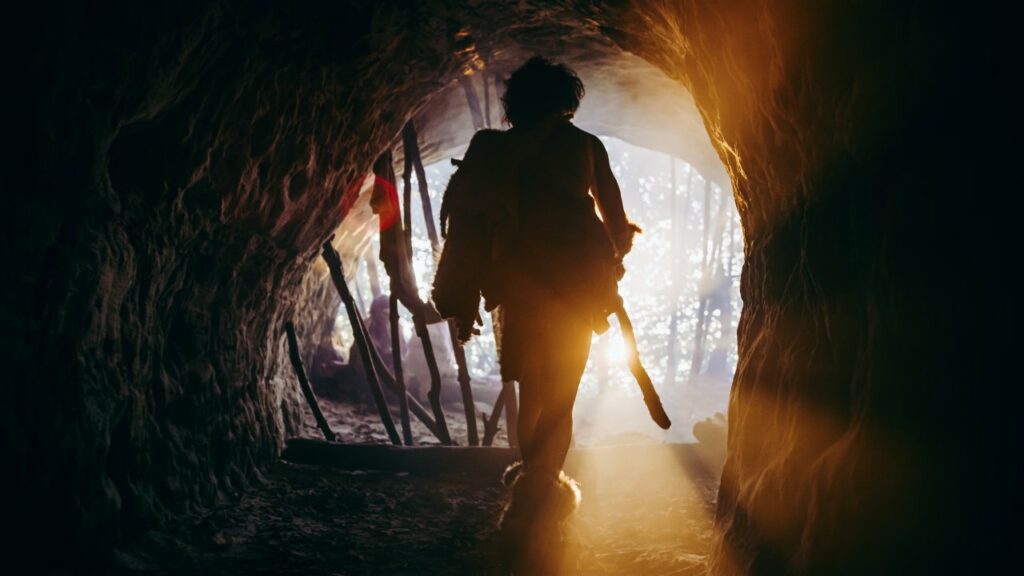
A palaeolithic cave dwelling with branches being added to insulate the entrance.
The palaeolithic period is the scientific name for what you imagine when you think of ‘caveman times’. Long before R-Values and comfortable houses, it was a time when humans had to struggle for everything.
Hunting was quite literally hit-or-miss, predators were everywhere, and the heat or the cold could be a death sentence. Early humans barely had any tools, so homes were usually just caves or natural shelters where they could get out of the sun or the rain.
But even these people made attempts to insulate themselves. Leaf litter and animal furs were used for makeshift mattresses to protect from the cold ground below, and branches could be bundled together to cover cave openings.
Despite their limited understanding of the world around them, it was instinctual for early humans to want to keep the warmth in, and keep the cold out.
Ancient Egypt
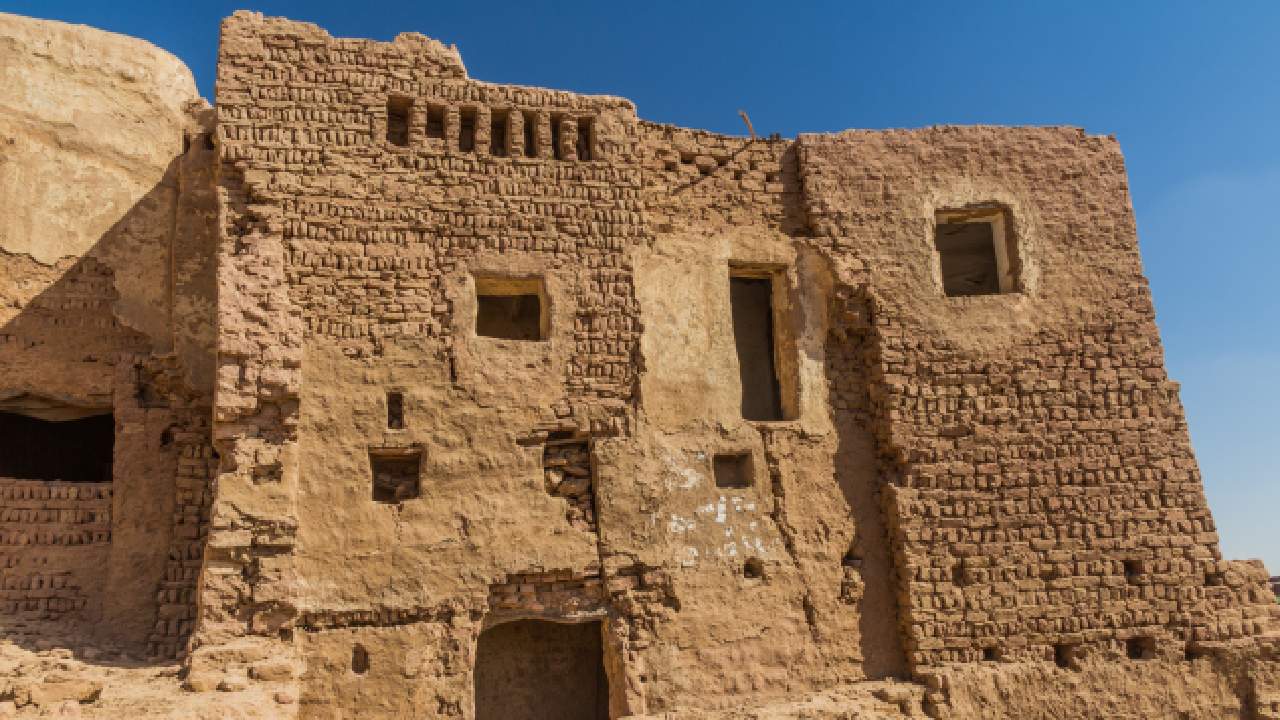
Ancient Egyptian mud brick ruins.
A good answer for the “when insulation was invented?” question is the ancient Egyptian period. That’s because they were the first to incorporate insulation into the building process.
Ancient Egypt was much more fertile and temperate than it is today, so the insulation needs of ancient Egyptians were actually quite complex. In the summer months it was incredibly hot and dry, but at night and during winter it could get very cold.
To solve this, they ingeniously created mud bricks, which acted like stone blocks, and created their homes with them. These blocks were able to stop the cold air coming in at night, but they also retained less heat than stone in summer which stopped homes from overheating during the afternoon.
Ancient Greece
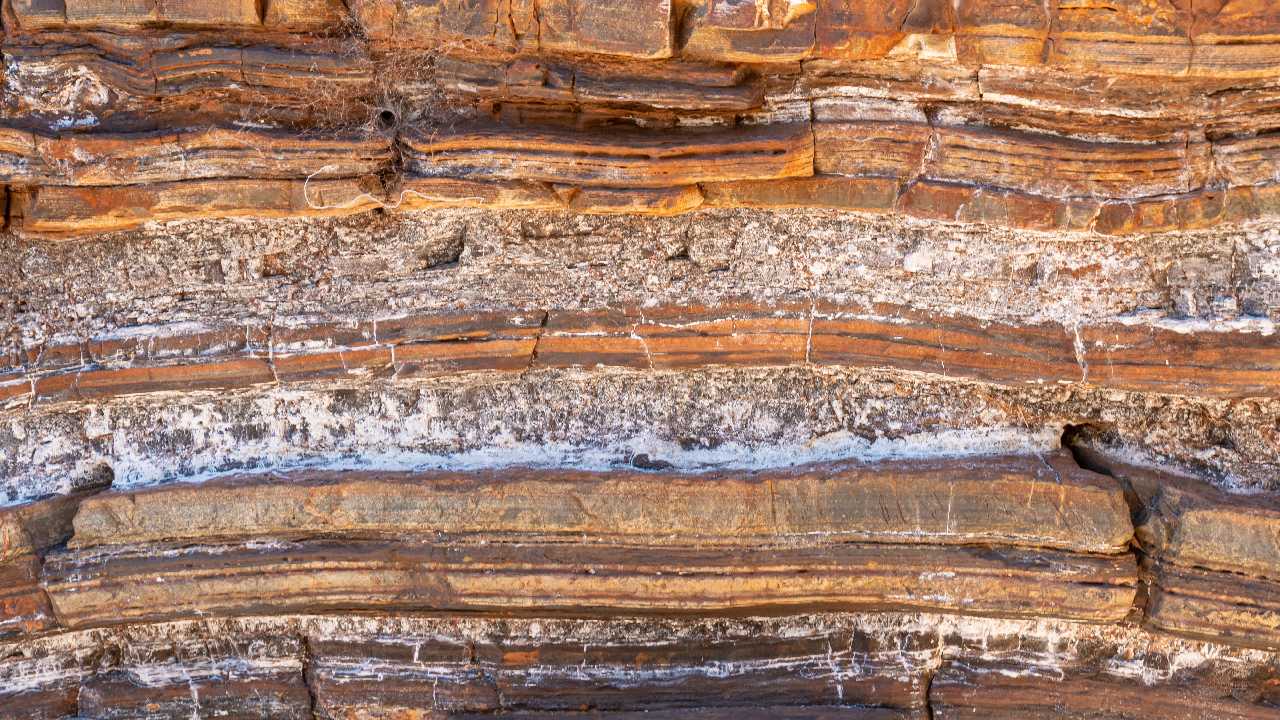
Asbestos fibres as they naturally occur between rock layers.
If the Egyptians were the first to integrate insulation into the construction process, the ancient Greeks were the first to create a genuinely original insulation product.
Asbestos, which means “inextinguishable” in ancient Greek, is a mineral first used for building purposes by the Greeks. “Inextinguishable” is strangely misrepresentative, because unlike wood or plant-based materials, asbestos is actually incredibly flame resistant. Historians chalk this up to the meaning of the word evolving.
Most early insulation materials were either highly flammable or easily destroyed by flame, so finding a naturally occurring, fire resistant mineral like asbestos was a major breakthrough in the ancient world.
Asbestos could also be woven into walls and roofs because it naturally occurs in a fibrous state, making it easy to weave. This paired well with another discovery attributed to the Greeks – realising they could regulate temperatures with air gaps.
By intentionally using air gaps in their homes, they could ventilate them in warmer months while closing them off in colder months to trap in the warm air. The malleability of asbestos meant they could easily shift it depending on the season, the maximise or minimise airflow.
The Romans
Ancient Roman pipes – though their cork insulated lining has been lost to time.
While the Greeks were the masters of insulating structures, the Romans invented insulation for specific parts of the home.
The Romans were pioneers of plumbing (which is a whole other story), but they quickly realised that transporting warm water was difficult because it would cool in transit. Given their love for bath houses, this was a big problem. No one likes a cold bath!
Ingeniously, they discovered that they could insulate pipes by wrapping them in cork casts. Cork is lightweight and very easy to shape, which made it ideal as a pipe lining.
As a concept, insulating pipes is still used today, and can even be thought of as a precursor to the insulated wiring that’s running through your home right now.
The Vikings
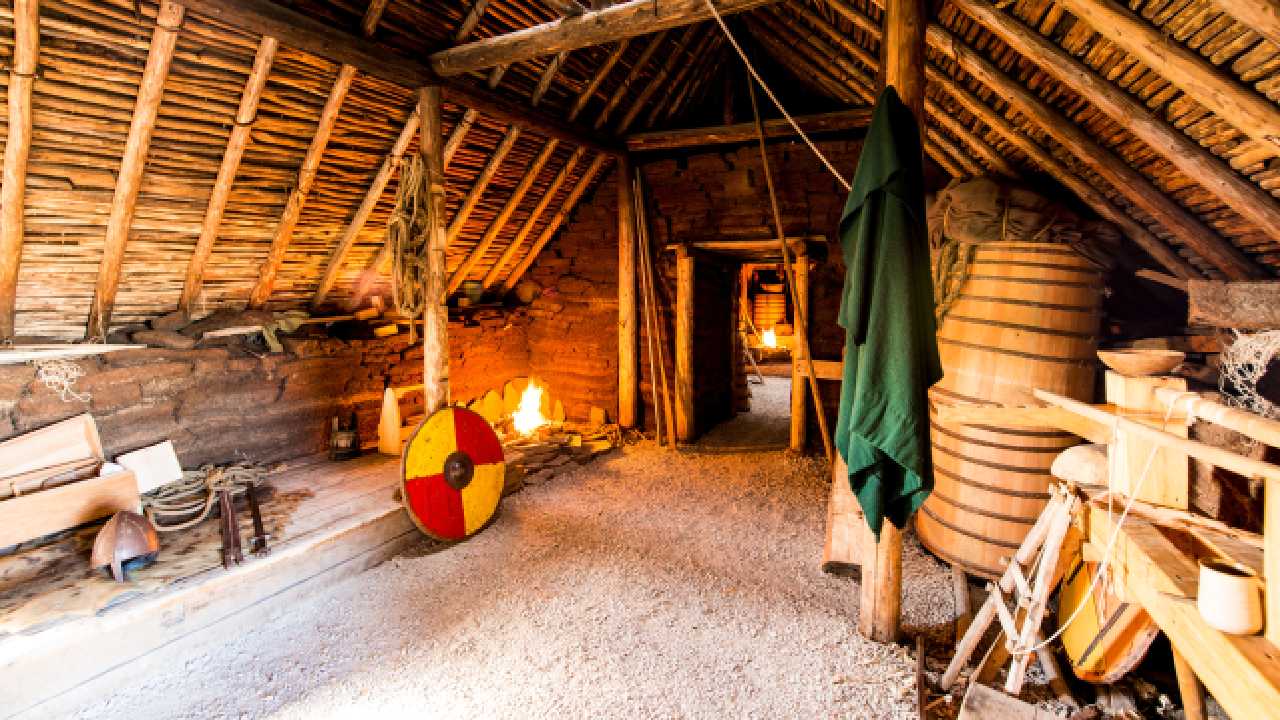
The inside of a wooden Viking dwelling.
Compared to the accolades of the Greeks and the Romans, the Vikings might not seem to have advanced the history of insulation very far. But you have to take their climate into account.
In the fjords of Scandinavia, temperatures for much of the year fall well below 0℃. The Vikings also built primarily with wood, which they had an abundance of, rather than mud and stone. To keep the bitingly cold climate out of their great halls, they used a special mud resin to seal the gaps between logs and beams.
Unlike the materials used by their predecessors in history, wood degrades quickly over time in harsh conditions. This meant air gaps would constantly appear which lead to icy drafts. With outdoor temperatures so cold, their use of the mud resin was vital to keeping their buildings insulated enough for them to survive.
The Middle Ages
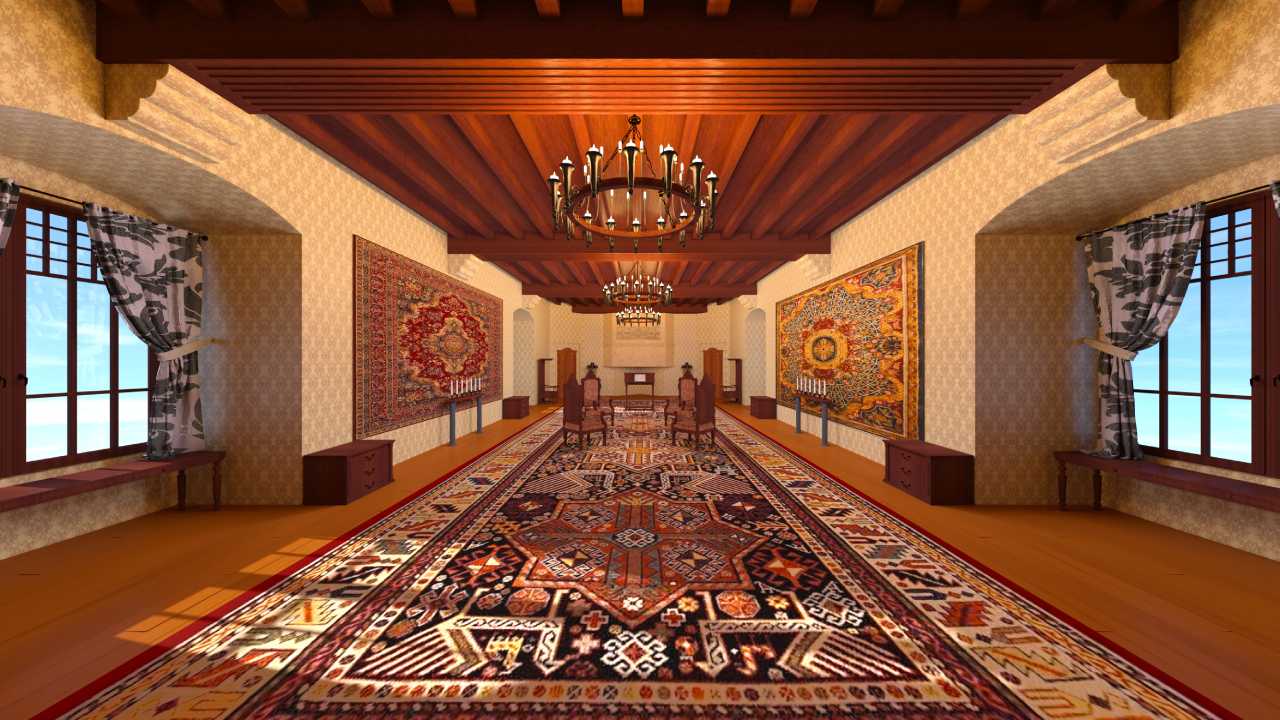
A medieval building insulated with woven tapestries and rugs.
The middle ages are known for their many wars, but for this article one war in particular stands out – the war against drafts!
By this point in history, buildings were starting to become massive! This meant there were a lot more large spaces that were difficult to keep warm.
Similar to the Vikings, folks in the Middle Ages realised drafts were leaching out all the warm air their grand fireplaces were producing. Unlike the Vikings, their solution was much more elegant.
Enormous woven pieces of cloth, known as tapestries, were hung over the walls of Middle Ages buildings. Similarly, rugs that spanned entire rooms were used on floors. Each of these were decorated with dyes, and often depicted important events like battles or scenes from the Bible.
These pieces of art were quite heavy, and were extremely effective at insulating large rooms. To this day, they hold the crown of the most stylish form of insulation ever invented!
The Industrial Revolution
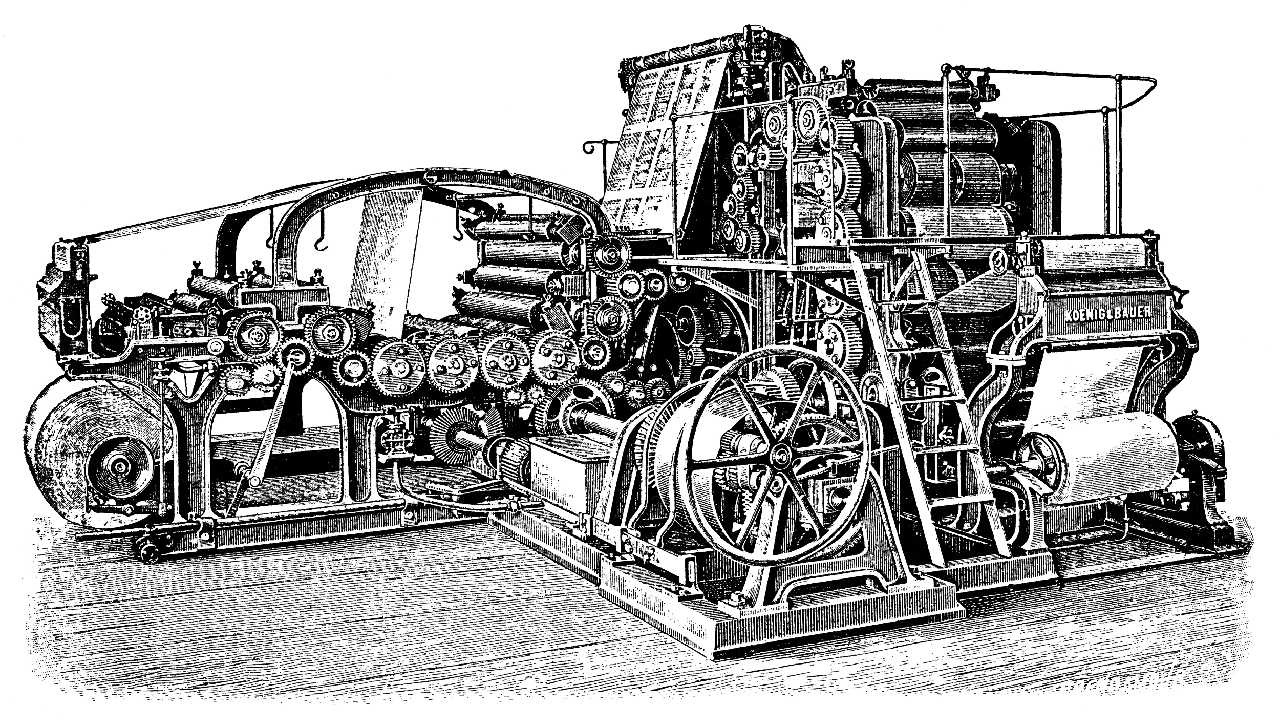
A sketch of a 19th century newspaper printing press.
Once it was being mass produced for pipes, manufacturers from other industries caught on to how cheap it was and started using it in various household objects, including as insulation.
Asbestos wasn’t the only form of insulation that grew in popularity throughout the industrial revolution era. One of the technical innovations of the industrial revolution were large scale printing presses that could manufacture newspapers on a massive scale.
Suddenly, people had huge amounts of paper at their disposal, and it quickly got used as insulation for filling cavities in roofs, walls and floors. Unbeknownst to the people using this wonderful new resource, they had stumbled on what would eventually become cellulose insulation.
The 30’s – 40’s
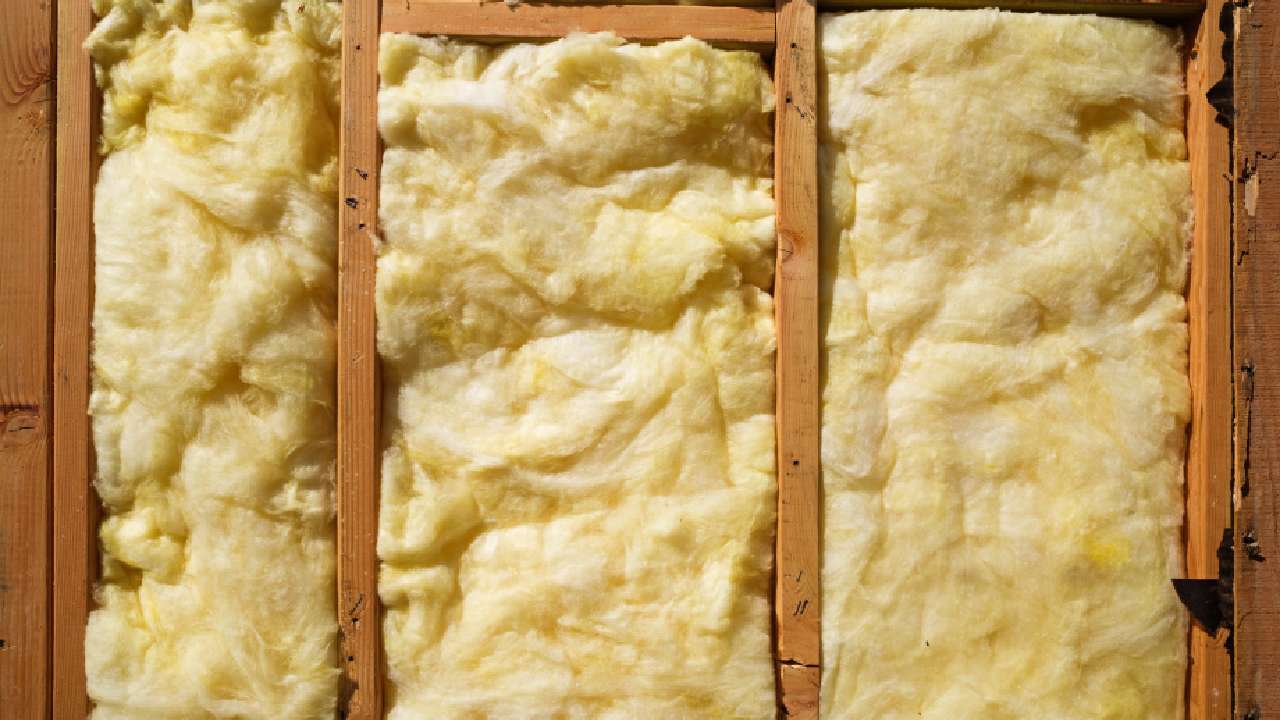
The modern version of glasswool insulation.
After its accidental discovery a century earlier, cellulose dominated the insulation landscape. It was easy and cheap to manufacture, and could be shredded or turned into paper mache to be easily applied. Unfortunately, it also had a major drawback that quickly saw it fall out of favour.
Cellulose was highly flammable. Since homes were now commonly containing technologies like electricity, fires from primitive wire faults were becoming much more common. Any home with cellulose insulation was practically a tinder box if something caused a spark.
Instead, a new form of insulation was invented. Glasswool, or fibreglass as it is most commonly known, was discovered in 1930 and is naturally flame retardant. It surged in popularity and largely replaced cellulose as the preferred insulation for most homes.
The 50’s – 80’s
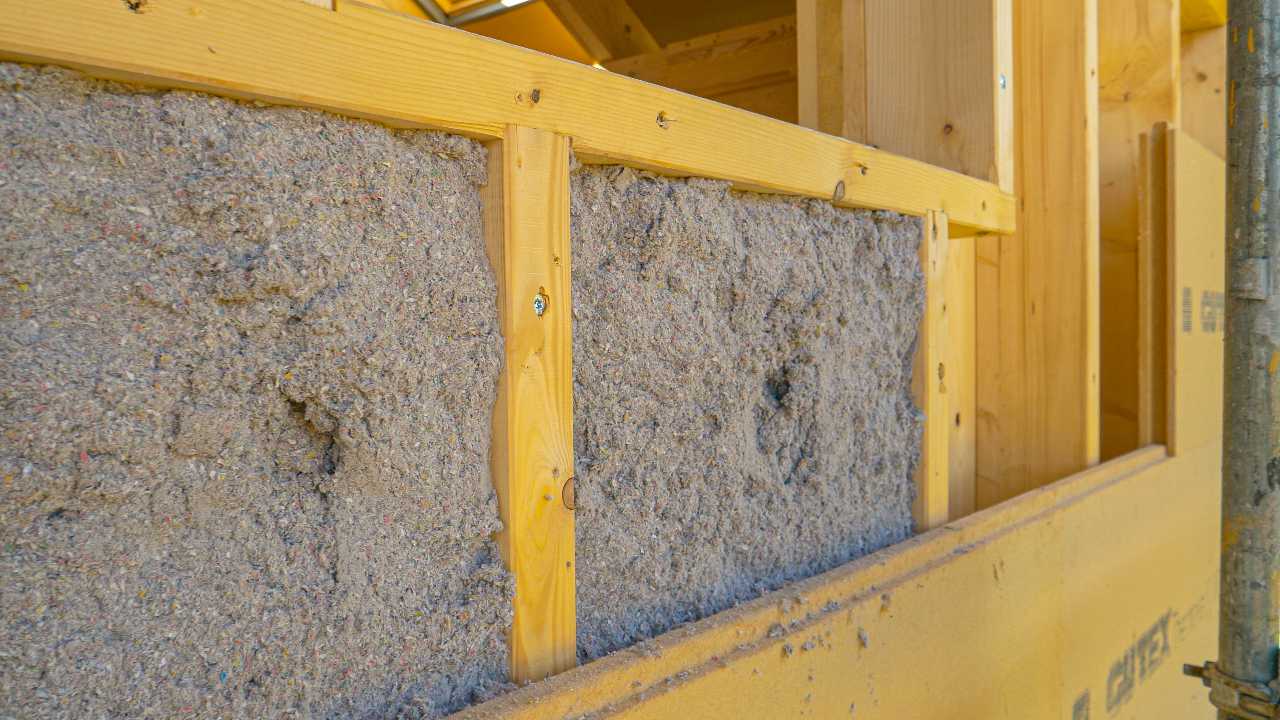
The modern, flame retardant version of cellulose insulation.
While fibreglass remains a common choice today, the second half of the 20th century saw advancements in flame retardant technology. These made cellulose viable again because its flammable nature had been its only serious drawback. Then, in the early 1980’s, a third contender emerged.
Polyurethane spray foam had been used by militaries across the world for decades, but had finally made its way to the residential market. Its popularity soared because of its flame retardant qualities and how easily it could be installed. Rather than being fixed in place, it could be sprayed in cavities. This made it incredibly versatile.
The Present Day
INSULBLOCⓇ insulation, the highest R-Value insulation in Australia.
In the present day, cellulose, fibreglass and polyurethane foam remain the most popular insulations in the world. But a growing push to become more sustainable is seeing this balance shift again.
In a strange way, the history of insulation has come full circle. Insulation was invented to protect ourselves from nature. Now, we want to make sure that we are protecting nature from our own products.
If you are considering insulation options, there is a good chance that you have come across Insulbloc. A new and innovative technology, Insulbloc has the highest wall insulation rating available. Because of its unique design, installing Insulbloc is simple and effective, making it a great choice.
Read on to learn more about how Insulbloc works and why it would be ideal for your home.
Why is Wall Insulation Important
Wall insulation helps control the temperature of your home. It limits the movement of hot and cold air and keeps your home temperate in both warm and cool weather. This will help you save on electricity, as your heating and cooling systems won’t need to combat excessive heat loss or gain.
In Australian conditions, this is essential. Westerly walls can heat up at an alarming rate during hot Australian summers. This isn’t just an inconvenience – it can majorly affect your ability to live in and enjoy your home.
Wall insulation can also help minimise noise in your home, and reduce condensation, so it is a critical part of any home design.
What Is Insulbloc?
As one of the most eco-friendly and effective insulation options on the market, Insulbloc is quickly becoming a popular choice. It is Australian-made and designed to suit Australian homes in both the heat and the cold.
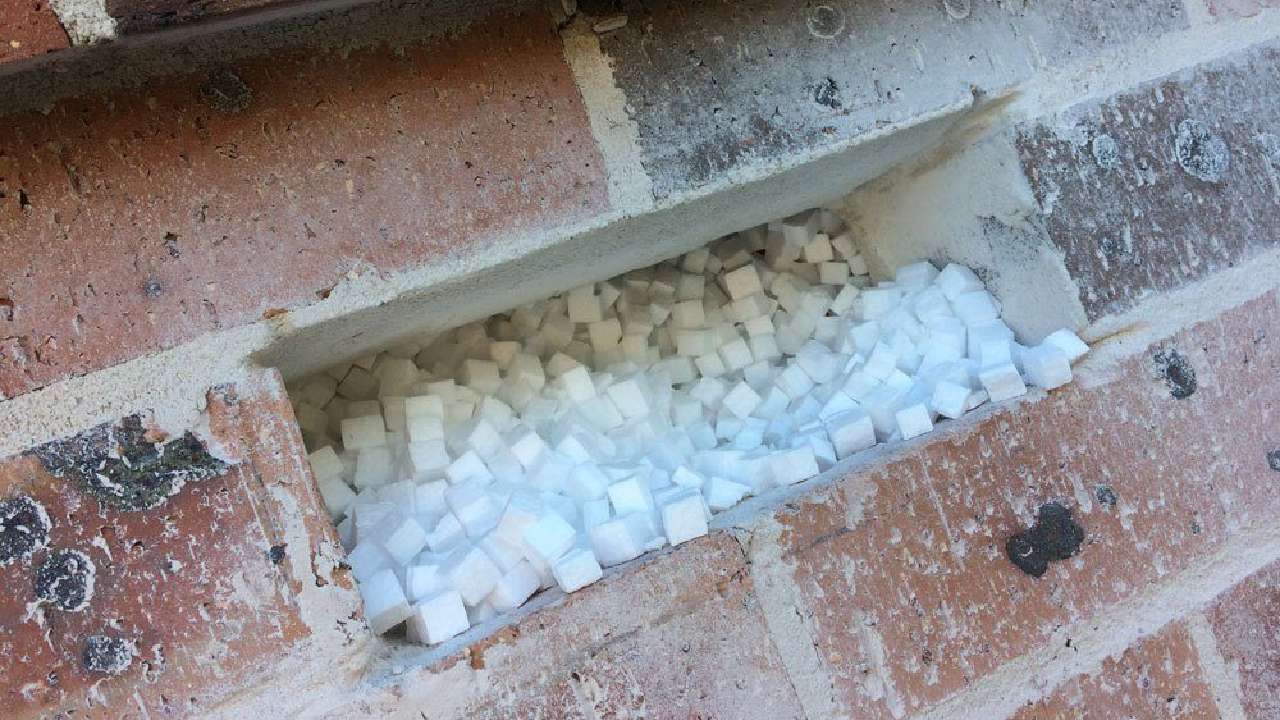
Insulbloc is an insulation made from small cube blocks of recycled polystyrene. These blocks can be pumped into wall cavities and fill small or difficult to reach spaces, such as around plumbing pipes. These cubes then lock together as they settle, becoming a gap-free layer of insulation.
Gaps can greatly hinder your insulation’s ability to keep hot air in or out, and will ultimately cost you more in heating and cooling bills. The gap-free nature of Insulbloc is why it has the highest R-Value (thermal resistance rating) in Australia.
Insulbloc is also fantastic at combating vapour, helping keep the air in your home clean and dry. Because there is no glue required to keep Insulbloc in place, you are not adding moisture into your wall cavities and the risk of wetting any exposed electrical wires is eliminated.
What are the Benefits of Insulbloc
In addition to its high insulation rating and unique block style, Insulbloc has many attractive benefits that make it your ideal choice.
Multiple Resistances
Insulbloc resists several factors that can damage insulation or the home itself. These include:
Does not spread fire
Dust
Moisture and vapour
Fungi and bacteria
Mould and mildew
Vermin
Fire retardant insulation is one of the key differentiating factors between good and bad insulation. While no one wants to think about their home on fire, it is an unfortunate reality. Especially in Australia where bushfires are also common.
The polystyrene blocks don’t contain formaldehydes or flammable particles. This ensures that Insulbloc has zero spread of flame.
You can feel more secure in an Insulbloc-insulated home, safe in the knowledge that it won’t contain harmful allergens or organisms that could make your family sick.
Insulbloc is hydrophobic, which means it resists water vapours and won’t spread damp through your home. You won’t have to worry about excess moisture degrading your timber, or creating unpleasant odours. Rest assured that both your family and your house will stay healthy.
Structurally Innovative
From a builder’s perspective, Insulbloc also has several great benefits. It’s lightweight and does not push on inner wall linings.
Its unique installation method also limits damage to the façade of a home. In most instances, simply removing a brick or drilling a single hole, the installer will have enough access. The brick or hole is replaced, leaving no trace.
Australian Product
Insulbloc is also a local Australian invention. By choosing it you are supporting our own insulation industry. Not only that, product delivery and issue resolution will be much faster than if you use overseas alternatives.
Where can Insulbloc be Used?
Insulbloc is perfect for existing walls and structures. If you have recently bought a new home, or want to insulate your current one, you don’t want the fear of damage to your home’s façade to limit your options. You also don’t want to have to tear down internal gyprock walls to install batts.
With Insulbloc you get the best of both worlds – high thermal protection and a ‘without a trace’ install.
Old homes are often beautiful and filled with period features like elegant doors, windows and fireplaces.
Unfortunately, the price you pay for these features is often dealing with draughts, poor temperature regulation and excess moisture.
Structurally, you can also find your roof, walls and floor to be seriously lacking in their temperature control abilities.
These issues can quite literally put a dampener on how you enjoy your home. Read on to find out how to insulate an old house.
Why Insulating an Old House is Important
While old houses may have character, they also have shortcomings. Modern building standards, such as minimum R-Value requirements, were not commonplace in past decades. If your house is old enough, they may not have even been invented yet!
While old houses are known for their sturdiness, things like insulation and proper finishing and sealing are often absent.
If you’re routinely throwing an extra log into your vintage fireplace, all of that extra heat is just compensating for the cold air that is entering your home.
Paying to insulate your old house will save you money in the future by limiting how much you need to rely on other heating sources. It will also make you much more comfortable and able to enjoy your home.
Doors, Windows and Fireplaces
In old houses, when things like doors, windows and fireplaces were installed the owners were more concerned with how they looked than how they functioned. Because of this, they aren’t as well fitted or sealed compared to their modern day equivalents.
Have your doors and windows assessed to see if they are letting in draughts. Often the frames of wooden sliding windows will have worn down since they were installed and draughts can easily filter through the gaps. Fireplace chimneys are another common culprit for unwanted cold airflow, with gaps often leading into the roof cavity or the living room itself.
Getting any gaps or holes fixed should be your first priority. You’ll be amazed by how quickly it makes a difference!
The Roof
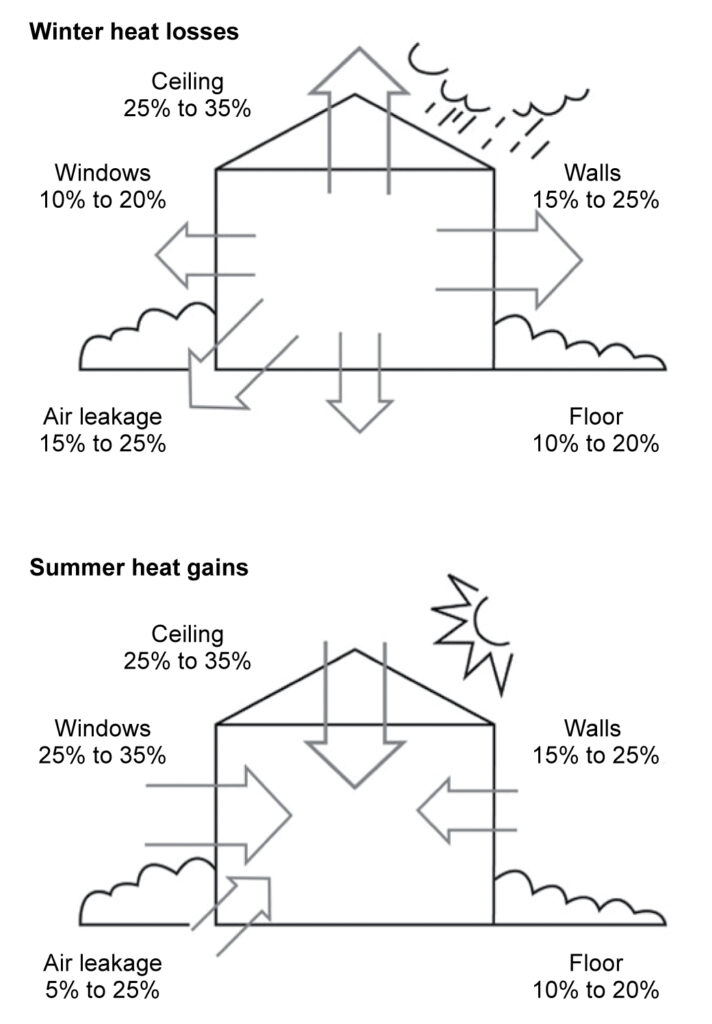
Up to 35% of a house’s total heat loss is through its roof. In old houses, this problem can be made worse by deteriorating materials and larger cavities.
Australia’s climate is hot, so modern homes are built with small roof cavities to reduce the amount of space for hot air to collect. In England, however, regular snowfall makes pitched roofs (pointed rather than flat surfaces) necessary.
Much of Australia’s late 1800’s/early 1900’s infrastructure was still being built to reflect an English pitched style. If you have an old home with a pitched roof, you need to insulate it.
In winter and summer, this cavity will fill with cold and hot air respectively. If the materials on your roof are worn with age, there could be gaps leading from the cavity to the interior, or from the cavity to the outside air. Both of these issues will make living in your old house uncomfortable.
The following insulation materials will fix your issue:
Woolcell
Polyester
Fibreglass
Woolcell pump in insulation is the most effective choice. As its name suggests, it can be pumped into your roof cavity without needing a person to physically gain access and install it. Once it settles, it will fill any gaps and create a breathable blanket that is great for preventing moisture buildup that is common in old houses.
The Walls
Now that the roof is insulated, it’s time to turn your attention to the walls. Your walls can lose up to 25% of your house’s heat. Even if you have insulated your roof, 25% is significant and will still be noticeable. .
The issue with insulating walls in old houses is the process is radically different depending on whether or not the wall has a cavity.
Many older homes don’t have wall cavities, as they didn’t become commonplace until later in the 1900’s. To check, you can examine your brickwork. If all of your bricks are horizontal, you likely have a cavity. If some of them only show the end of the brick, you likely have a solid wall.
To be certain, you should get a professional to inspect your walls.
Wall Does Have a Cavity
If the wall does have a cavity, there are a number of solutions, including:
Insulbloc
Rockwool Pump-In Fibreglass
Batts
Insulbloc is an insulation material made from small polyester cubes that can be pumped into wall cavities through small, discrete holes. These cubes settle to form a strong protective barrier against the cold outside air, and they don’t cause any visible damage that could jeopardise the heritage listing or character of your old house.
The Floor
With the roof and the walls insulated, there is just one surface left before your old house is toasty warm – and you’re standing on it!
Much like the walls of an old house, there are two kinds of floors, each with different insulation processes.
Floor Does Not Have a Cavity
If your floor doesn’t have a cavity it can be insulated, but the process is very disruptive and expensive. You will need to hire professionals who will raise your floor to create a cavity. This cavity will then be insulated with polyester batts.
This process will rip up your floor and cost you living space because your new floor will be higher than your old one. Not to mention, floors without a cavity are less likely to need insulating since there is no room for draughts to travel underneath. This option should only be considered as a last resort.
Floor Does Have a Cavity
To insulate a floor with a cavity, professional installers simply have to measure the distance between floor joists and fit your polyester batts between them. This is non-destructive and doesn’t take long. You can have your old house feeling as snug as a modern one in no time.
4 Seasons Insulation
Old houses are fantastic for letting you enjoy classic styles and features from the past, but they can also come with their fair share of issues.
By insulating the roof, walls and floor of your old house (where applicable), you can make sure that the cold air stays where it belongs – outside!
4 Seasons Insulation are experts at insulating any kind of home, old or new, and offer a range of insulation varieties and solutions.
The 4 Seasons team is both proud and excited to announce the rebranding of our business.
On January 15 this year, a severe fire broke out at 2/8 Sailfind Place, Somersby. At the time, this premises housed both the head office and the warehouse.
All of their stock, several installing trucks and most of their office equipment were lost in the fire. Thankfully, none of the team were present.
Shortly after the fire, Managing Director Jade Nicoll made the solemn promise to “continue servicing our customers and keeping all of our staff employed.”
“Thankfully, no one was there at the time. We can rebuild our stock, but to lose one of our team would have been truly devastating.” Jade went on to say.
Not only has 4 Seasons kept both of those promises, it hasn’t just survived, it has thrived.
Introducing a brand new website and branding refresh – 4 Seasons has made the best of a bad situation and is looking fresher than ever.
With the same friendly, professional team as before, 4 Seasons is sure that with the help of their new brand they will end 2022 in a far better place than when they started it.
“Honestly, if you told me back in January that we would be even better now than before the fire, I’m not sure I’d have believed it. But here we are, it’s pretty surreal.” Jade said.
4 Seasons would like to thank all of their customers for continuing to have faith in their services, their suppliers for reacting so quickly and keeping the stock coming, and their team for the patience and professionalism shown throughout an incredibly stressful period.
4 Seasons provide insulation installation and removal services to the entire East Coast of NSW. Insulation is a great way to keep your home comfortable, cost-efficient and eco-friendly. With a wide range of insulation types, and installation options, you can be sure that 4 Seasons will always find the right solution for your lifestyle and your home.
Did you know that roughly 20% of a home’s heat is lost through its floor?
When most people think of insulation, they think about the walls and roof of a home. But underfloor insulation is essential for maintaining a stable, comfortable temperature.
What is Underfloor Insulation?
In principle, underfloor insulation works the same way as regular insulation. It still involves creating a barrier between the temperatures outside your home, and the desired temperature inside your home.
The main difference is wall and roof insulation contend with elements like rain, wind and direct sunlight, while underfloor insulation must protect against the cold and moisture of the ground, as well as underfloor draughts.
Insulation can be installed in cavities beneath elevated floors and is a great way to keep your home warm.
If you are considering installing underfloor insulation, here are the top 5 benefits that will help you make your decision.
Prevents Cold Airflow Through the Floor
A cold floor is more immediately noticeable than a cold wall or roof. No one likes to get out of bed on a chilly winter morning and put their feet on freezing tiles or floorboards. Unfortunately, floors are the one surface in a house that you can’t avoid touching.
Underfloor insulation can keep your feet warm in winter by sealing up gaps where draughts, chilled by the cold temperature of ground, seep into your home.
Lowers Energy Costs
If your home is uninsulated, you have to heat it artificially using a heater or a fireplace. By installing underfloor insulation, you can get away with heating your home less often because the inside temperature will naturally be higher.
The one-off price of installing underfloor insulation will also pay itself off over time by reducing the cost of electricity, gas or firewood.
Reducing your reliance on artificial heating saves you money, but it also saves the environment. For people looking to limit their carbon footprint, insulation is a smart investment.
Imagine the energy you could save if you didn’t need to rely on heaters during winter? This is especially true of smaller electric heaters, which don’t create much lasting warmth and have to run continuously for any benefit. They require much more energy than most people realise, and it really isn’t worth the temporary warmth they provide.
Protects Against Moisture
Whether your home has an underfloor cavity or not, moisture can be a serious problem.
If you have an uninsulated underfloor cavity, there is nothing to prevent damp, moist air from entering your home. This air is cold and will make your home much less comfortable.
Reduces Sound
An often unknown or overlooked benefit of insulation is sound-proofing. The ground carries soundwaves which travel through unsealed floors and up into your house. If you live in a place with a lot of noise, especially from high traffic, underfloor insulation will muffle it before it can disturb you.
4 Seasons Insulation
While underfloor insulation is an excellent way to see instant improvement, for a truly comfortable, warm home, you’ll want all of your surfaces to be insulated.
With your floor, walls and ceiling all working together, your living area will have full protection from the elements.
At 4 Seasons Insulation, our experts can assess your home and offer the perfect solutions to keep you toasty warm during the winter months.
Despite our best efforts to use energy wisely and maintain a stable temperature, without proper functioning insulation our home’s ability to regulate the inside environment is compromised.
This results in sweltering temperatures in summer, and freezing conditions in winter.
Your home’s ability to maintain temperature can be measured, and that measurement is known as its ‘R-Value’ or sometimes ‘R-Rating’.
What is insulation?
To understand R-Value, you first need to understand what insulation is and how it works. Insulation is the material that blocks airflow from escaping or entering your home. It is effective at blocking hot air from entering during the summer, and escaping during the winter, so it is an important part of your home’s heating and cooling systems no matter the weather.
There are different types of insulation that can work best in different climate types, and an insulation expert can help you understand your needs and your options for insulation, helping combat any other heating or cooling problems in your home that an expert may identify.
What is an R-Value?
Insulation R-Value specifically measures how well your home’s insulation resists conductive heat flow. There are a few main factors that contribute to the overall R-Rating, including:
The insulation material
Your home’s location and average temperature
The lifespan of your insulation material and how old it is
The moisture level in your home
Quality of installation
R-Value can be an important factor in determining your insulation decisions because a high insulation R-Value will not only keep your home warmer in winter or cooler in summer, but it will also save you money on your electricity bills because your home won’t have to rely on air conditioning or other systems.
Why is my home’s R-Value important?
Without proper insulation, your home can lose a significant amount of warmth in winter, and gain heat in summer, which ultimately costs you money. Your heating and cooling systems need to work harder to combat escaping air and maintain the temperature. You can reduce your electricity bill significantly just by paying attention to your insulation, and your home’s R-Value.
Savings don’t just come in the form of decreased energy bills when you insulate your home with R-Value in mind. You will also find that you need to repair your heating and cooling systems less frequently since they won’t need to work as hard to heat and cool your home.
What can I do to increase the R-Value of my existing home?
Increasing the R-Value of your home is still possible in your existing home with a few small renovations. The most effective way to do this is by installing thicker and better-quality insulation, or topping up your existing insulation. This creates more substantial barriers and prevents heat from escaping, but there is one notable exception to this rule.
This is where quality installation becomes an important factor. If your installer understands where insulation is best placed within your home and can utilise techniques such as the principle of “thermal bridging” where insulation is placed near joists, studs, and other heat-conducting building materials, then your home’s R-Value will increase.
Using Passive Design To Further Improve Energy Efficiency
When your home is specifically designed for the climate you live in, there should be little need for electric heating and cooling units. This type of home design is called ‘Passive Design’, and it can save you thousands on your electricity bill.
Using natural heating sources, orientation, thermal mass, and importantly, insulation, you can take advantage of the natural climate of your area and minimise heat loss or gain. Passive Design is best applied to new builds, but if you have an existing home, renovations can go a long way towards creating a passive design in your home.
In Australia, there are eight different climate zones, and passive design is going to look different depending on which of them you live in. Passive design is a hugely expansive idea and deserves an article all of its own, but we will go through the two most relevant concepts here; passive heating and passive cooling.
Passive heating
Passive heating is used often in cooler climates and works to allow winter sun into your home while keeping existing heat inside. If you live somewhere that’s very cold in winter but also can get quite warm in summer, then it’s important to balance passive heating design with passive cooling design to maximise benefits in both potential climates.
Passive cooling
Passive cooling encourages airflow and evaporative cooling to keep your home cool in warmer seasons and climates.
For both of these strategies, insulation is a key factor in ensuring passive design. Ensuring you use the correct insulation type for your climate and passive design goals will be critical, as will ensuring placement is correct.
Another type of insulation that is important to facilitate passive design is window glazing. Windows and doors bring in or let out significant airflow, and will need to be treated to ensure they are working with your passive design goals, and not against them. Different types of glazing will work for different climates and home orientations.
Conclusion
A home that utilises both smart insulation and passive design strategies is going to regulate temperature far more effectively, allowing its R-Value to soar. With the help of experts, you can ensure that your home is built to work with your local climate rather than against it.
If you are looking to improve your home’s R-Value by replacing or installing insulation, get in touch with our team today! We are your local experts and can ensure that you have the right insulation for your climate, helping you save on heating and cooling.
There’s nothing worse than sitting at home on a sweltering hot summer’s day and feeling every sweat droplet roll down your face. On the flip side, the last thing you need is to be walking around your home in winter with blue lips and chattering teeth.
You want the outside weather to do just that – stay outside. That’s where insulation comes into the picture, preventing those sweat droplets and blue lips before they even form.
A well-insulated home offers year-round comfort. You’ll find yourself reaching for that air-conditioning button far less and enjoying the natural refuge your home creates all on its own.
Are you curious about how insulation works? We have all the answers you need to live in comfort day in and day out.
What is insulation?
Insulation is a material you can use in your home to resist or block the flow of heat energy. Put simply, in summer, you can use insulation to prevent the heat from outside entering your home. During winter, you can keep any heat you have inside from escaping out. It’s the perfect barrier to create year-round comfort you can rely on.
Types of insulation – and how they work
How your insulation works all depends on what type you opt for. When it comes to insulation products, you’re looking at two main categories: bulk and reflective. These can also be combined into a composite material.
At 4 Seasons Home Insulation, we only sell materials that meet Australian Standard AS/NZS 4859, Materials for the thermal insulation of buildings.
Heat can be transmitted in three different ways:
Convection: the way heat circulates through liquids and gases
Conduction: the way heat moves through materials
Radiation: heat that travels in a straight line
Bulk insulation deals with the former two, while reflective insulation caters to the latter. As you might expect, composite insulation aims to offer the best of both worlds and block out as much heat as possible.
Bulk insulation
Bulk insulation is made from low-density materials and generally uses pockets of trapped air to prevent the transfer of convected and conducted heat. It works well in both ceilings and floors, trapping the heat in when it’s cold, and preventing it from entering when it’s warm. It can include:
Cellulose fibre pump in materials
Polyester batts
Fibreglass batts including rock wool
Rock wool pump in materials
Reflective insulation
As the name suggests, reflective insulation works by reflecting radiant heat, and is commonly used in the hotter parts of Australia. It uses a layer of foil backed by paper or plastic to bounce the heat back, away from your home. This style insulation relies on an air layer at least 25mm next to the surface. Materials include:
Foil faced blankets or sarking
Foil faced boards
Multi-cell foil products
Choosing the best insulation
As you might expect, not all insulation is created equal.
If you’re looking to compare different types of insulation on the market, then you need to understand its R-value. The higher this value, the higher the level of insulation. This value is determined by the type of insulation, its thickness and its density.
Your home is made up of the roof and ceilings as the outer walls. Each of these materials possess their own heat resistance (R-value). By adding the R-value of each of these components, you can determine the total R-value for your home.
The NCC and BASIX (in New South Wales) set out the minimum requirements when it comes to R-values for materials. Ideally, you want to set your sights higher than this for complete comfort in your home. Use it as a baseline, not as the standard.
Is insulation worth it?
The answer to this question is going to rely on a number of varying factors, including:
It is an essential component to New Builds (BASIX Requirements) in Australia
Energy savings (less reliance in heating and cooling)
The environmental impact
Comfort
Health
Where you live and what the climate is like
How much time you spend at home
The simple answer is yes: insulation acts as a barrier to your home, keeping it nice and warm in winter and cool in summer. Properly insulating your home reduces heating and cooling costs, while also improving comfort. No more breaking out the icepacks or bringing your hot water bottles to bed.
Without insulation, you’re allowing any artificial hot or cool air you create in your home to simply escape straight back outside, while also allowing the outdoor temperatures to creep inside.
Good insulation regulates the temperature and keeps your fingers off that air-conditioning remote.
Finding the right insulation
Investing in the right insulation for your climate significantly reduces your heating and cooling costs – saving your valuable pennies. In fact, insulation is now mandatory in new builds, which makes sense since it’s cheap and will pay itself back in no time.
However, getting your hands on the right product isn’t enough. It needs to be installed correctly to perform well and avoid condensation problems.
The effectiveness of your insulation is also dependent on where and how it is installed. For example, insulation that is flattened, won’t provide its full rated R-value.
You also need to be aware of any thermal bridging in your home. These are pathways created by the building frame and allow heat and cold to travel through. Thermal bridging can be minimised with the right tools and expertise on hand, to ensure you receive the most effective insulation.
That’s where 4 Seasons Home Insulation comes in – we have over 30 years experience in installing insulation correctly. If you’re looking for more information or would like to arrange a quote, fill out a contact form today.
It’s no wonder they’re shouting the name Woolcell from the rooftops.
That’s because this Australian-made, pump-in material is helping to keep the home insulation industry thriving – and Aussie homes comfortable all year round.
But what has led to this uptick in demand?
Well, Australia is in the grip of a supply shortage when it comes to home building and renovation materials at the moment, and this includes home insulation products.
Supply chain delays for some products are being held up for as long as 26 weeks – and insulation batts and other insulation materials are affected because of this.
Materials are in high demand worldwide due to the fact that many countries are using construction to stimulate their economies. This in turn is driving up costs.
The Suez Canal blockage, too, has caused shipping costs to rise.
But Woolcell is proving to be the perfect solution.
You Can Get Pump-In Woolcell Right Now
Woolcell is an Australian-made premium pump-in roof insulation material.
Natural salts are used in making Woolcell (borax, and boric acid), plus it’s a product made from Australian wool and recycled paper.
The wool keeps the overall material light and together, giving you 100% coverage.
It has fire retardant properties and it’s breathable, so the chances of mould are greatly reduced. This is good news for those who suffer from asthma or allergies.
The Woolcell also soaks up harmful indoor air pollutants too.
It was even awarded a National Wool Invention Competition ‘Prize of Distinction’ and is CSIRO-tested, so it meets all necessary industry standards.
And, besides being environmentally friendly, it also offers a lifetime warranty.
Woolcell – Your Best Bet For Total Coverage
Regardless of the access restrictions, Woolcell can be installed inside flat roofs, cathedral ceilings, or between floors and roof pitches with very little effort; it is the ideal solution for areas where bulk insulation like batts cannot be installed.
The lack of gaps in Woolcell means that it is better for thermal and acoustic insulation. Woolcell is also less likely to suffer from moisture damage, and is less prone to vermin infestation.
Woolcell has a superior R-value and is semi-bound, so it doesn’t require surface sprays to adhere, resulting in a long-lasting and stable product.
The Importance Of The ‘R-Value’
In the building and construction industry, the thermal resistance rating, or R-Value, is a measure of a material’s ability to resist heat transfer.
A higher R-Value means better thermal resistance. Units are measured in m2K/W.
Specifying insulation should take into account the thermal resistance of the material.
Therefore, it is more economically efficient to increase the thickness of the product than to use one with a lower thermal conductivity in order to achieve a specific thermal resistance.
R-values for roof insulation range between R3.5 and R6, R3.5 near the coast and R6 in cold climates such as alpine areas.
Insulation has many benefits, which is why it is the most popular climate solution for houses.
Improved comfort
Electricity savings
Noise dampening
Reduced carbon footprint
Safe
An insulated home maintains a comfortable temperature – neither too hot nor too cold.
Keep cool or warm air inside, reducing your air conditioner’s or heater’s workload.
The insulation you choose for your home can help dampen or soundproof it.
You can reduce your impact on the environment by using less electricity.
To ensure flame retardancy and safety, insulation must undergo rigorous testing.
Woolcell: In Summary
Insulation that is 38% more effective than alternative batt insulation
Suitable for flat and pitched roof construction, as well as dry wall insulation
Exceptional acoustic performance
4Seasons Home Insulation offers supply only, install only, supply and install, remove insulation, or remove and re-insulate. We provide FREE quotes to inspect and measure your home or business. 4Seasons Home Insulation installers are trained and fully qualified (unlike some subcontractors) to ensure a high standard for the ultimate performance of your chosen product. We can help you, just contact us today.
Whether you’re a new parent spending more time at home, or your workplace has moved to a more ongoing flexible schedule, the chances are your home is now bearing the brunt of increased foot traffic, noise, and energy bills.
Considering that you might be spending more time at home, why not invest some time and money in simple home maintenance?
There’s More Than One Type of Insulation:
Roof Insulation
Without roof insulation you could be losing 35% of your heating/cooling capacity. That translates into 10 degrees cooler in summer and up to 7 degrees warmer in winter. Added benefits of roof insulation include lower damp conditions and mould and fire protection.
Top-up & Removal
The majority of homes built pre-2000 seriously need insulation repair, top-up or, in some cases, removal and reinstallation. Without attention to this important issue, homeowners are not gaining any benefits from their current insulation product. They are definitely paying way more for heating and cooling than they could be. Contact 4 Seasons for more information.
Wall Insulation
Without wall insulation you could be losing 25% of your heating/cooling capacity. And that’s without considering the power bills which are already costing you a fortune. Talk to 4 Seasons Home Insulation and find out about saving money while lowering energy consumption.
Existing Walls
Reduce noise transfer and increase the comfort of home and the efficiency of workplaces. 4 Seasons Home Insulation provides a series of products suitable for various levels of required acoustic insulation. Acoustic Insulation can help reduce noise transfer between:
Internal rooms i.e. between bedroom/bathroom or bedroom/living areas
Between the first and second floors in two-storey homes
Between apartments (in apartment living)
Dampen environmental noise from busy roads or aircraft
Underfloor
Without floor insulation you could be losing 20% of your heating/cooling capacity. With well-installed insulation you will:
Lower your energy consumption
Decrease greenhouse gas emissions
Save on your electricity bills
Improve your comfort levels
Reduce the impact of mould
Minimise your reliance on heating and cooling systems.